Quarter tones are an oversimplification: let’s compare Turkish Makam, Arabic Maqam, and Persian Dastgah
The “quarter tone scale” isn’t real — it's way more colorful than that
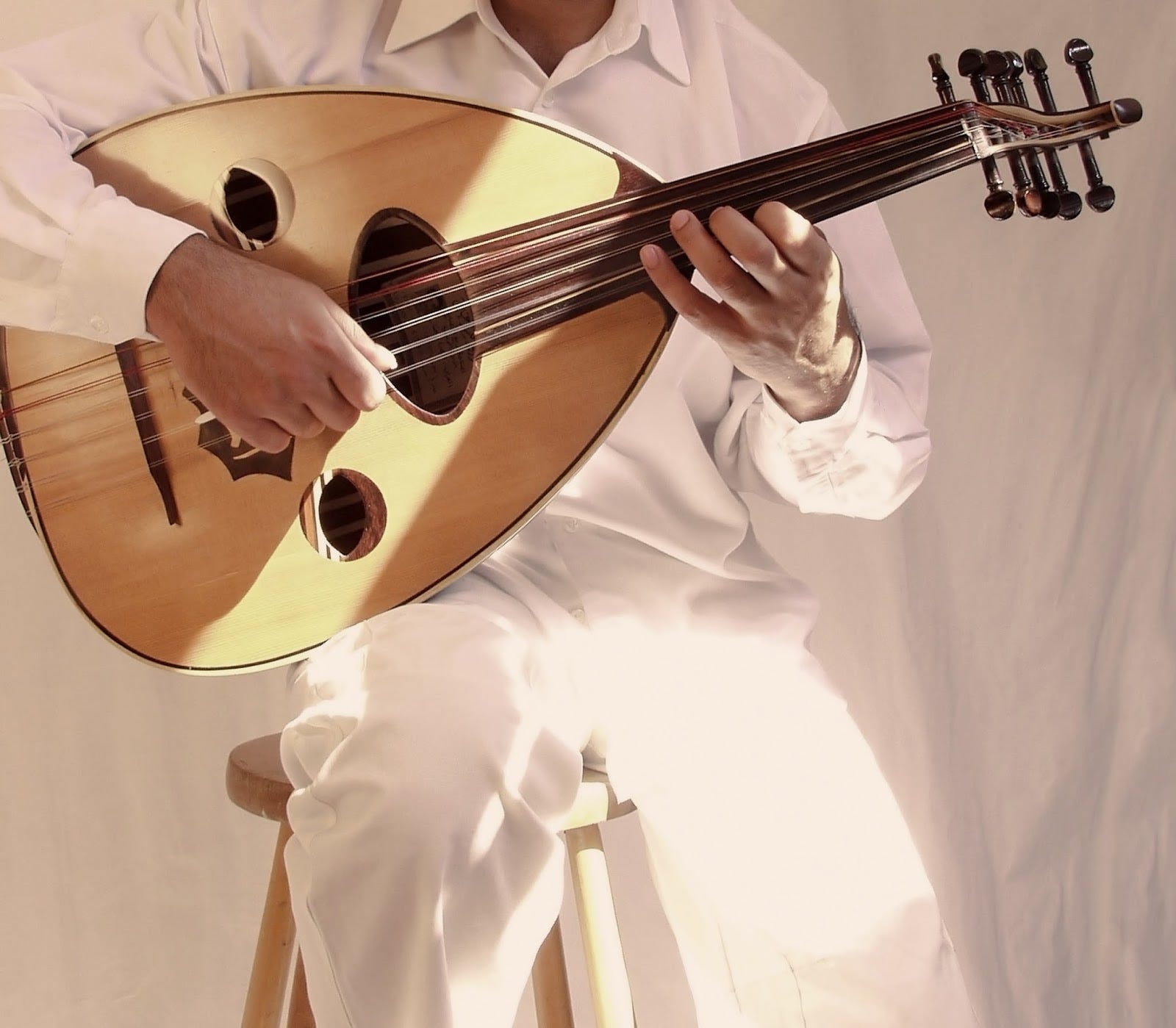
If you’ve ever heard Middle Eastern music described as “using quarter tones,” you’ve been given a shortcut that’s useful enough to get you in the door but wrong enough to lock you out of what’s actually going on. All three of the great classical modal traditions of the region — Turkish Makam, Arabic Maqam, and Persian Dastgah — use microtones, yes. But calling them all “quarter-tone music” is a bit like describing jazz, Gregorian chant, and Indian classical raga as all “basically using the same twelve notes.” Not a hundred percent wrong, but deeply misleading.
This article is for musicians who already understand scales, modes, intervals, and the basics of equal temperament, but who haven’t gone deep on microtonality. By the end, you should understand not just what makes these three traditions microtonal, but how they differ from each other at a structural level — and why those differences matter.
First, a Quick Primer on EDO
Before we dive in, you need one concept: EDO, which stands for “Equal Divisions of the Octave.” Standard Western music uses 12edo — the octave divided into 12 equal semitones. Quarter-tone music uses 24edo — those same 12 semitones, but with an extra note inserted exactly halfway between each pair. The larger the EDO number, the more notes per octave you’re working with, and the finer your pitch grid becomes.
We’ll use three EDOs as rough approximations throughout this article: 53edo for Turkish Makam, 24edo for Arabic Maqam, and 36edo for Persian Dastgah. These are imperfect models — none of these traditions are actually equal temperament systems — but they give you a useful mental picture of the granularity each system operates at. Think of them like grid lines on a map: the map isn’t the territory, but the grid helps you understand the scale.
Turkish Makam: Pythagorean Commas All the Way Down
The Rough Model: 53edo
In Turkish music theory, the octave is divided into 53 equal intervals known as commas (koma), specifically the Holdrian comma. Each whole tone is an interval equivalent to nine commas. Wikipedia
That sentence alone should reframe your expectations. You’re not working with two notes per semitone (as in quarter-tone theory). You’re working with a grid where a single whole step — C to D, say — contains nine distinct steps. A semitone contains four or five. The system has teeth.
The Holdrian comma has been employed mainly in Ottoman/Turkish music theory by Kemal Ilerici, and by the Turkish composer Erol Sayan. For instance, the Rast makam (similar to the Western major scale, or more precisely to the justly-tuned major scale) may be considered in terms of Holdrian commas. Wikipedia
Now, 53edo is a theoretical framework, not a description of how Turkish musicians tune in practice. The TSM style employs a 53-commas-per-octave temperament with unequal semitones, resulting in a soft tuning similar to just intonation. This enables a nuanced exploration of microtonal relationships within long, slow melodic phrases. Academia.edu The “commas” are a counting tool, a way to describe interval relationships between the pitches of a makam without resorting to Western note names that don’t quite fit.
What makes Makam tick: Seyir and the comma grid
A makam, more than simply a selection of notes and intervals, is essentially a guide to compositional structure: any composition in a given makam will move through the notes of that makam in a more or less ordered way. This pattern is known in Turkish as seyir (meaning basically, “route”), and there are three types of seyir. Miraheze
A makam is not a scale. It’s a modal personality — it includes the scale, yes, but also where you start melodically, where you cadence, which notes are emphasized, and how the melody typically moves through the register. This is true of all three traditions covered here, and it’s the single most important thing to internalize if you’re approaching these systems from a Western perspective.
Similar to the construction of maqamat noted above, a makam in Turkish music is built of a tetrachord built atop a pentachord, or vice versa. Trichords exist, e.g. Saba, but are rarely used. Miraheze
Sound familiar? It should — this is reminiscent of how ancient Greek theory described modes as combinations of tetrachords. The difference is that in Turkish theory, the internal intervals of those tetrachords can involve comma-level distinctions that don’t map onto Western note names at all.
The Pythagorean Secret
Here’s the thing that surprises most Western musicians: the comma structure of Turkish Makam is fundamentally Pythagorean. The system isn’t based on dividing the octave equally; it’s based on stacking pure fifths (3/2 ratios) and letting the math land where it lands. In Turkish music theory, particularly the AEU system laid out by Arel and Ezgi and Uzdilek, the Pythagorean intervals are notated as natural pitches, and there are several accidentals used to describe microtonal deviations from them. One of the foundational ideas of the AEU system is that a major second (by which they mean the Pythagorean major second, justly tuned to 9/8) is made up of 9 commas. Microtonaltheory
If you’ve ever heard the claim that Turkish music has “eighth tones” in contrast to quarter tones, this is why. Microtonaltheory The neutral seconds (the intervals that split the gap between a semitone and a whole tone) come in two flavors in Turkish theory — one sitting just above the minor second, one sitting just below the major second — and they’re both different from the Arabic quarter-tone neutral second, which sits precisely in the middle. That three-way distinction is invisible in 24edo but visible in 53edo.
For Turkish music, Ozan Yarman also proposes 34edo, 41edo, and 46edo, within limits also 29edo, as acceptable compromises… 34edo and 41edo thus are versatile systems for both Turkish music and for Arabic music. Xenharmonic Wiki
In short: the 53-comma system is the official theoretical framework, but real-world Turkish practice is fluid, and ethnomusicologists have found that actual instrument tuning (especially on the qanun, which has metal tuning levers) often reflects something closer to 72edo. The 53-comma framing is the map; the music is the territory.
Arabic Maqam: Quarter Tones as a Working Framework
The Rough Model: 24edo
The modern Arab tone system, or system of musical tuning, is based upon the theoretical division of the octave into twenty-four equal divisions or 24-tone equal temperament, the distance between each successive note being a quarter tone (50 cents). Wikipedia
This is the tradition that gave rise to the “quarter-tone” descriptor, and it’s worth understanding both why that description caught on and why it’s still incomplete.
In 1932, the influential Cairo Congress of Arab Music decided that maqamat should be notated in 24-EDO, if not necessarily played that way. Microtonaltheory That’s a crucial caveat. The notation system was standardized to quarter tones for practical reasons — it made it possible to write Arabic music on a Western staff with two additional accidentals (a half-flat ♭ and a half-sharp) — but musicians were never actually constrained to play exactly those pitches.
Arabic music theory divides an octave into 24 quarter-tones. Many maqamat include notes that can be approximated with quarter tones, although they rarely are precise quarters falling exactly halfway between two semitones. For this reason, when writing Arabic music using the Western notation system, there is an understanding that the exact tuning of each note might vary with each maqam and must be learned by ear. Another peculiarity of maqamat is that the same note is not always played with the same exact pitch. The pitch may vary slightly, depending on the melodic flow and what other notes are played before and after that note. Babayagamusic
That last sentence is fundamental. The “neutral third” in Arabic Maqam Rast — the note that sits between a major and minor third — is not a fixed 350 cents (which is what 24edo gives you). It’s a living, contextual pitch that responds to the melodic line around it.
What makes Maqam tick: Ajnas and development
A maqam also determines other things, such as the tonic (starting note), the ending note, and the dominant note. It also determines which notes should be emphasized and which should not. Wikipedia
Arabic maqamat are built from smaller building blocks called ajnas (singular: jins), which are three-, four-, or five-note cells. Different combinations of ajnas produce different maqamat — you might recognize this as analogous to how tetrachords are used in Turkish theory, and indeed the two systems share deep historical roots. The difference in practice is that Arabic theory tends to use 24edo as its working notation grid, while Turkish theory uses the 53-comma system as its theoretical foundation, even when the performed pitches diverge.
The notes of a maqam are not always tuned in equal temperament, meaning that the frequency ratios of successive pitches are not necessarily identical. Wikipedia
Some maqamat — like Ajam and Nahawand, which correspond roughly to major and minor — don’t need any microtones at all. Others, like Rast and Bayati, are built around that neutral second or neutral third, and those intervals are the expressive heart of the tradition. The quarter-tone notation gives you a rough address; the actual tuning is learned through immersion in the tradition.
The same name, different pitch
Here’s where comparing Turkish and Arabic becomes genuinely interesting. Both traditions have something called “Rast.” In Arabic practice, Maqam Rast features a neutral third — roughly 350 cents, sitting midway between a major and minor third. In Turkish practice, Makam Rast features a major third closer to the pure just-intonation 5/4 (around 386 cents). In common Arabic and Turkish practice, the third note in Rast is almost exactly halfway between western major and minor thirds above the tonic. Wikipedia But the Turkish version specifically tends toward the just major third — a choice with deep Pythagorean logic behind it — while the Arabic version stays neutral. Same name, meaningfully different sound.
Persian Dastgah: Flexible Intervals and Modal Families
The Rough Model: 36edo
Persian classical music is the hardest of the three to pin down with an EDO approximation, and that difficulty is itself instructive.
Farhat discusses three theories of intervals and scales in Persian music: Persian music is based on a 24-quarter-tone scale; Persian music is defined within a 22-tone scale; and Persian music is based on five flexible intervals from which all modes are constructed, with no concept of a basic scale. Theory of Music
The most influential of these theories — Hormoz Farhat’s, developed in his landmark 1990 book The Dastgah Concept in Persian Music — rejects the idea of a fixed equal-tempered grid entirely. The idea of dividing scales into equal intervals is an outcome of westernization in Persian music. Rhythmitica According to Farhat, Persian music is built on five interval categories — some of them “flexible,” meaning their exact size varies from context to context and cannot be pinned to a single cent value.
He found the smaller neutral tone about 135 cents and larger one 160 cents. He also mentioned another unstable interval which is bigger than a whole tone as 270 cents. Rhythmitica
Compare: in 24edo, you’d have 150 cents for a neutral tone, exactly halfway. In Persian practice, the interval floats in a range around that point, and the exact position is part of what gives each dastgah its character.
This is why 36edo makes a reasonable rough model: 36 is divisible by 12, it contains the overly-familiar 12edo as a subset. It divides 12edo’s 100-cent half step into three microtonal steps of approximately 33 ¢, which could be called “sixth tones.” Xenharmonic Wiki 36edo’s 133¢, 167¢ and 267¢ intervals are closer to Persian scale steps than the 150¢, 150¢ and 250¢ of 24edo. Nonetheless, they’re still not particularly close. Over the span of a whole scale, those few cents of error add up to tens of cents, and a noticeable out-of-tune sourness. Xenharmonic Wiki The honest truth is that no small EDO cleanly represents Persian music — the tradition actively resists that kind of quantization.
What makes Dastgah tick: Gushehs, Radif, and modal families
Each dastgah consists of seven basic notes, plus several variable notes used for ornamentation and modulation. Each dastgah is a certain modal variety subject to a course of development (sayr) that is determined by the pre-established order of sequences, and revolves around 365 central core melodies known as gushehs, which musicians come to know through experience and absorption. Wikipedia
That word “gusheh” is key. A dastgah isn’t just a scale or even a mode in the Western sense — it’s a family of pre-composed melodic fragments, each called a gusheh, which performers learn as a repertoire and use as the raw material for improvisation. The full collection of gushehs across all dastgahs is called the radif, and mastering the radif is the central task of a Persian classical musician’s education.
Each dastgah’s repertoire (its radif) consists of ordered gushes. The first gushe (the daramad) sets the tonal center of the dastgah. Later gushes often modulate subtly to different tetrachordal pitches to fill out the entire mode’s range. Tapadum
This is fundamentally different from both Turkish and Arabic practice. In Turkish Makam, the seyir (route) is a compositional principle but not a fixed repertoire of named melodies. In Arabic Maqam, improvisation (called taqsim) is guided by the modal identity of the maqam, but there’s no equivalent of the radif as a canonical melodic corpus. Persian Dastgah has the most rigidly codified pre-compositional material of the three — and yet the intervals themselves are the most fluid.
Notation: Koron and Sori
In the early 20th century, Ali-Naqi Vaziri introduced Western theory to Persian music: he devised notation for the microtonal intervals using the sori (half-sharp) and koron (half-flat) symbols and tried to explain Persian modes in Western terms. Tapadum
The koron lowers a pitch by roughly a quarter tone, and the sori raises it by roughly a quarter tone. “Roughly” is doing a lot of work in that sentence. In practice, sori and koron are not exactly half-sharp or half-flat and can reside anywhere. Ismir Farhat himself argued that Vaziri’s quarter-tone framing was a theoretical error imposed from outside the tradition — useful for notation and pedagogy, but not descriptive of how the music actually sounds in performance. The note following a koron, for instance, is often played about 20 cents flatter than written, as an unnotated expressive convention that players learn by ear.
Farhat’s approach takes into account instruments such as tar and setar, whose fingerboards have fixed frets, resulting in minimal pitch variations. His research leads to the introduction of the unequal 17-tone scale, which offers a new and culturally authentic perspective for understanding and analyzing Persian music, free from the influences of Western musical traditions. Tuning
The tar and setar — Persian lutes with movable frets — can be set to accommodate the specific intervals of each dastgah, meaning the available pitches physically change depending on what you’re playing.
Side-by-Side: What’s Really Different
Let’s be concrete. All three traditions share:
- A modal system where scales are more like melodic personalities than just note collections
- Microtonal intervals that don’t exist in 12edo Western music
- A strong improvisational tradition shaped by pre-existing modal rules
- A historical connection to ancient shared music theory going back to medieval Islamic scholars like Safi al-Din al-Urmawi
But they diverge in important ways:
Theoretical framework: Turkish Makam is rigorously Pythagorean — its commas are derived from stacking perfect fifths, and the whole system has a mathematical elegance rooted in that. Arabic Maqam uses 24edo as a practical notation convention, but its actual intervals are messier and more contextual. Persian Dastgah rejects fixed grids almost entirely, arguing that the intervals are inherently flexible and context-dependent.
Melodic development: Turkish Makam has seyir (route) as a compositional principle. Arabic Maqam is guided by the identity and “personality” of each maqam, including which notes to emphasize and which transitions are idiomatic. Persian Dastgah is the most codified: you literally learn a repertoire of hundreds of named melodic pieces (the radif) and use them as the building blocks of every performance.
Neutral intervals: All three traditions use neutral intervals — intervals between the major and minor versions of a second, third, or sixth. But their exact sizes differ: the Turkish neutral second sits closer to the Pythagorean diminished third (around 294 cents) or the augmented prime (around 113 cents), not in the middle; the Arabic neutral second is typically the equal-tempered 150 cents; the Persian neutral tone is somewhere in the 135–160 cent range, variable by context.
Relationship to harmony: None of these traditions are primarily harmonic in the Western sense — they’re essentially monophonic melodic traditions. But Arabic Maqam has the most accommodating attitude toward Western-style harmony when it appears in contemporary settings. Persian and Turkish traditions are more resistant to harmonic overlay, because their microtonal intervals actively clash with Western chord structures.
Why “Quarter Tones” Falls Short
The quarter-tone label was partly a political and practical choice. In 1932, the Cairo Congress of Arab Music, pro-occidental Turkish and Egyptian delegates rallied the West Asian and Maghreb nations to follow the Western notation system and use an equal-step system to make Middle Eastern music more compatible with Western instruments and notation. Bandcamp Daily The goal was legibility and interoperability with Western music, not accuracy. The result was a notation convention that simplified — and in some ways distorted — three rich, distinct theoretical traditions into a single “quarter-tone” framework.
For a Western musician approaching these traditions, the quarter-tone framing is useful as a first step. It tells you that you’re going to encounter neutral seconds and neutral thirds, and it gives you a way to read the notation. But if you stop there, you’ll miss the fact that Turkish Makam treats those neutral intervals very differently than Arabic Maqam does, and that Persian Dastgah treats interval size as fundamentally variable rather than fixed. You’ll also miss the modal architecture — the seyir, the gushehs, the ajnas — that transforms a list of pitches into a living musical language.
There is not one Middle-Eastern system but many. There are not just differences between Arabic and Turkish systems, but there is also significant regional variations within each musical culture. Even 53edo and 72edo, although already containing much more pitches than the vast majority of Western musicians can imagine, still do not cover all details. Xenharmonic Wiki
Where to Go Next
If you want to dig deeper into the microtonal theory behind any of this, the Xenharmonic Wiki is an excellent starting point, particularly its overview of Arabic, Turkish, and Persian music. Individual pages for 53edo, 24edo, and 36edo are also worth reading — not because these EDOs accurately model the traditions, but because the wiki articles explain what each grid is good and bad at, which sharpens your understanding of the real traditions by contrast.
For Turkish Makam specifically, the AEU (Arel-Ezgi-Uzdilek) notation system is the standard written form, and learning to read its ten accidentals is the gateway to the published repertoire. For Arabic Maqam, MaqamWorld.com is a well-regarded pedagogical resource in English. For Persian Dastgah, Hormoz Farhat’s The Dastgah Concept in Persian Music(Cambridge University Press) remains the key academic text, and Ableton’s Tuning section has excellent accessible overviews of each dastgah if you want to explore with a DAW.
The quarter-tone description isn’t a lie. It’s just a coarse map of a very fine territory. The real music is in the gaps.
Comments
Post a Comment