If you’ve stumbled into the world of just intonation and xenharmonic music, sooner or later you’ll encounter the hexany — one of the most elegant and practical 6-note scales available to the adventurous composer
What Is a Hexany?
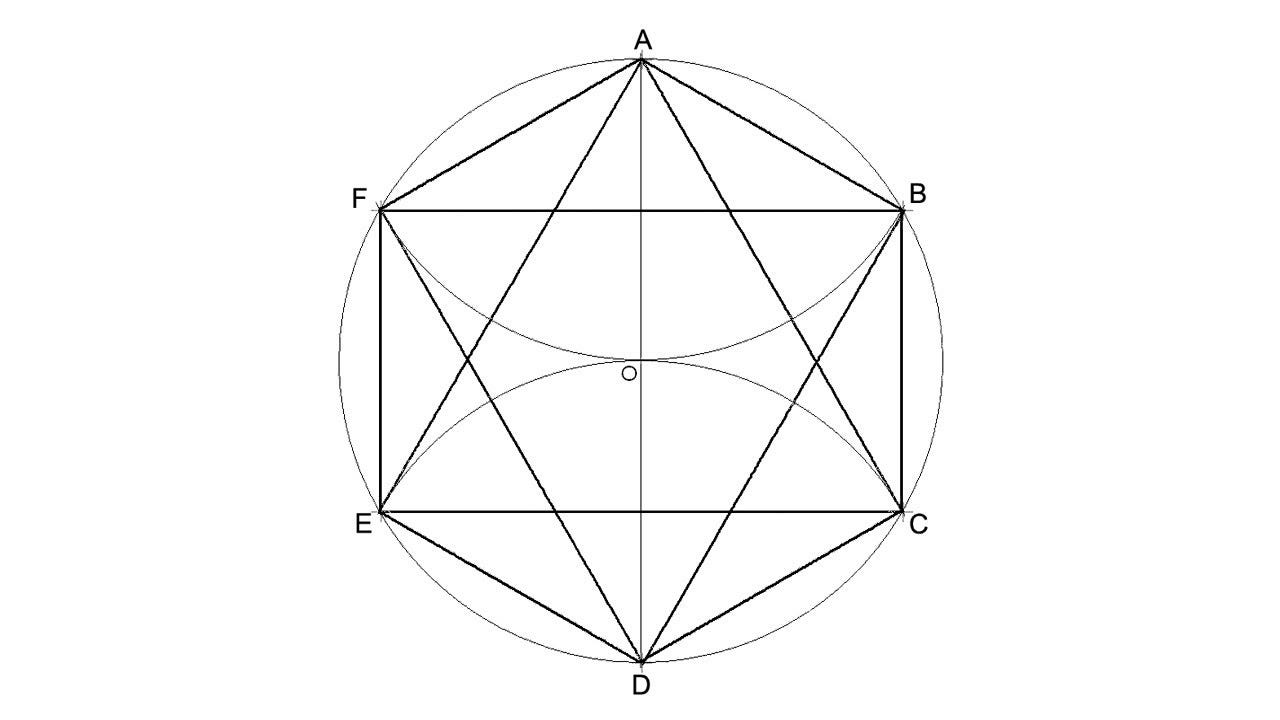
A hexany is a six-note scale built using all possible pairwise products of a chosen set of four numbers (called factors or generators). For example, the classic 1–3–5–7 hexany takes the factors 1, 3, 5, and 7, multiplies each pair together (1×3, 1×5, 1×7, 3×5, 3×7, 5×7), and octave-reduces the results into a single octave. The result is a six-note scale with eight built-in just intonation triads, no single tonic (it is a deliberately “uncentered” structure), and a beautiful geometric symmetry analogous to an octahedron.
Hexanies are a special case of combination product sets (CPS), invented by the great tuning theorist Erv Wilson. Composers including Kraig Grady, Daniel James Wolf, and Joseph Pehrson have written music using hexanies, and they remain one of the best entry points into just intonation composition.
The Xenharmonic Wiki maintains a large gallery of CPS scales with listener impressions and composer notes attached. This article collects and summarises all the hexanies from that gallery that contributors have identified as useful, interesting, recommended, or evocative — leaving out those flagged as difficult, useless, too similar to 12-EDO, or better left for other purposes.
No-3s Hexanies (subgroup without the factor 3)
These hexanies avoid multiples of 3 entirely, giving them a distinctive non-Pythagorean flavour.
1–5–7–11 hexany — Described as “lopsided.” An uneven but characterful scale living in the 2.5.7.11 subgroup.
1–5–7–13 hexany — Described as a “spicier whole tone scale.” A great choice if you want something recognisably related to the whole tone scale but with sharper, stranger flavour.
1–7–11–13 hexany — “Extra xenharmonic.” For listeners and composers who want to go deep into unfamiliar sonic territory.
5–7–11–13 hexany — “Melodically effective, contains a diminished chord.” The presence of a diminished chord gives it a useful hook for composition even within an unfamiliar tonal world.
No-5s Hexanies (subgroup without the factor 5)
These avoid fifths of the 5-limit (no pure major thirds), operating in the world of 3, 7, 9, 11, 13, and beyond.
1–3–7–9 hexany — “A detempering of the archy scale.” Great for composers who already like the sound of archy and want to explore its just intonation roots.
1–3–7–11 hexany — “Symmetrical shape; 2 strong tonal centres.” The symmetry makes it melodically coherent, and two tonal centres gives it a useful harmonic anchor despite being uncentered in the CPS sense.
1–3–7–21 hexany — “A detempering of the semaphore scale.” A nice bridge between regular temperament theory and just intonation.
1–3–9–11 hexany — “An even mix of xenharmonic and familiar.” One of the most accessible no-5s options, balancing strangeness with recognisability.
1–3–9–13 hexany — “An even mix of xenmelodic and familiar.” Particularly noted for melodic usefulness rather than harmonic.
1–3–9–17 hexany — “Whole tone scale-like structure, but with new unfamiliar melodies and harmonies.” The 17 factor introduces a subtle strangeness without completely overturning the familiar whole-tone feeling.
1–3–11–13 hexany — “Sounds surprisingly un-xenharmonic.” A paradoxically accessible scale despite its unusual factors, good for easing listeners into microtonal music.
1–3–21–29 hexany — “Fierce, groovy, dark.” One of the more emotionally vivid hexanies on this list.
1–3–21–49 hexany — “A detempering of the slendric scale.” A link to the gamelan-adjacent world of slendric temperament.
1–7–9–11 hexany — “Warped xenharmonic whole tone scale.” Like the whole tone scale put through a funhouse mirror — recognisable, but distinctly strange.
3–7–9–11 hexany — “Fresh 11-limit JI version of the augmented scale.” If you like the augmented scale and want a just intonation spin on it, this is your hexany.
3–7–9–13 hexany — “Effective both at melody and harmony.” One of the more well-rounded hexanies in the no-5s category — useful for actual composition rather than just exploration.
3–7–11–13 hexany — “Very lopsided, very xenharmonic.” For committed explorers of the strange.
3–9–11–13 hexany — “Lopsided but with lots of useful consonances.” Despite being asymmetric, the consonances make it usable for actual harmonic writing.
3–9–19–31 hexany — “Sparkly, pretty.” A pleasingly evocative description — one of the few hexanies in high odd-limit territory that reviewers found immediately beautiful.
7–9–11–13 hexany — “Neat step pattern useful for melody and harmony, no 5-limit intervals — forces xenharmony.” An excellent choice for composers who want to deliberately break free of any 5-limit comfort zone. Noted for having a particularly useful melodic step pattern.
No-7s Hexanies (subgroup without the factor 7)
These avoid 7-limit intervals, giving a different kind of strangeness — the 11 and 13 factors create unfamiliar colours without the “bluesy” quality of septimal intervals.
1–3–5–11 hexany — “Stable chord roots + very xenharmonic.” A useful combination: the 5-limit provides harmonic grounding while the 11-factor adds weirdness on top.
1–3–5–13 hexany — Same description: “stable chord roots + very xenharmonic.” The 13-limit flavour differs subtly from the 11-limit one above — worth comparing them directly.
1–3–5–45 hexany — “Very useful foundation for adding xenharmonic notes on top of; can play all Zelda’s ocarina melodies.” Yes, really — this hexany is noted for its practical compatibility with familiar melodic shapes while still being a genuine just intonation scale.
1–5–11–13 hexany — “An omniconsonant scale.” This is a significant claim: every note relates consonantly to every other. A remarkable structural property.
1–5–13–15 hexany — “Big variety of consonances useful for emotionally expressive music.” Versatility for the expressive composer.
1–9–11–15 hexany — “Very melodically effective; all the chords will be unfamiliar.” A hexany where the melodic side shines even though the harmonies are fully foreign territory.
1–11–13–15 hexany — Same description: “very melodically effective; all the chords will be unfamiliar.”
1–15–45–75 hexany — “A detempering of the blues scale with sweet simple just intonation harmonies that blend well.” One of the most practically appealing hexanies for anyone coming from Western music — the blues connection gives an immediate emotional context.
3–5–9–13 hexany — “Very useful both for melody and harmony; contains good barbados intervals.” The barbados interval (13/10) is a distinctive 13-limit colour; this hexany packages it in a melodically and harmonically functional scale.
3–5–11–15 hexany — “Both xenharmonic yet also highly accessible — recommended for beginner microtonalists.” One of the two explicitly beginner-recommended hexanies on the entire wiki list. Start here.
3–5–13–15 hexany — Also “both xenharmonic yet also highly accessible — recommended for beginner microtonalists.” The sister scale to the one above, with 13 substituted for 11. Another excellent starting point.
3–9–13–15 hexany — “Very xenharmonic melodies; easy to learn the notes and intervals — especially audibly distinct from one another.” Learnability is a real virtue; a scale where you can reliably hear the difference between each step is ideal for training your ear.
5–9–11–15 hexany — “A detempering of the porcupine scale; nice melodies.” Another temperament-to-JI bridge, this time via the popular porcupine temperament.
5–11–13–15 hexany — “Highly recommended; an even mix of familiar and xenharmonic.” Explicitly flagged as highly recommended, and balanced enough to work in a wide range of musical contexts.
No-11s Hexanies (subgroup without the factor 11)
These stay within 7-limit or 13-limit territory, giving warmer, more “septimal” or 13-limit colours.
1–3–5–7 hexany — The original, canonical hexany. Described as “cold, hazy.” This is Erv Wilson’s most famous hexany and the one most composers encounter first. Despite the slightly understated description, it is an essential scale and the logical place to begin any hexany journey.
3–5–7–9 hexany — “Useful for melody and harmony.” A solid all-rounder.
3–5–7–13 hexany — “Useful for building dekanies.” Noted primarily as a compositional building block, good for expanding into larger scales.
3–5–7–15 hexany — “The optimal configuration for maximising the number and variety of simple harmonies available in a hexatonic scale; strong melodically also.” This is one of the most enthusiastically described hexanies in the entire gallery — if you want sheer harmonic richness, this is the one.
3–5–15–21 hexany — “Solidly rooted and consonant.” Simple, grounded, and practical.
3–7–9–15 hexany — “Big variety of chords available, both familiar and xenharmonic ones.” A good hexany for composers who want to move between familiar and strange harmonic territory within a single scale.
5–7–9–15 hexany — “Potential for good compositions; a detempering of the starling scale.” Another temperament bridge, this time via the starling temperament.
5–7–13–15 hexany — “Both harmonically and melodically strong, and useful for bihexanys.” Dual usefulness: works as a standalone scale and as a module in larger 12-note scales.
No-13s Hexanies (subgroup without the factor 13)
3–5–7–11 hexany — “Very xenharmonic.” One of the most straightforwardly adventurous hexanies — all four prime factors (3, 5, 7, 11) are present and none is omitted.
3–7–11–15 hexany — “Xenharmonic but also with sweet major thirds.” A pleasing contrast: the 5-limit sweetness of pure major thirds softens the xenharmonic strangeness of the 7 and 11 factors.
5–7–9–11 hexany — “A neji of 6edo with an over-35 semiprime feel.” Interesting for those who want a connection to familiar equal temperament structures. A “neji” (near-equal just intonation) of 6-EDO means this hexany approximates the six-note whole tone scale.
7–11–17–45 hexany — “Dark, supernatural, metallic.” One of the most atmospherically evocative hexanies on the entire list, crossing into the 17-limit for an especially uncanny sound.
27–35–47–59 hexany — “Like melting rainbow ice cream in the sun.” A high-limit hexany with a curiously impressionistic quality, according to the contributor who described it.
No-17s Hexanies (subgroup without the factor 17)
7–11–13–15 hexany — “Useful for writing melody — expanding into a bihexany makes it more useful still.” A melodic workhorse that functions as a launchpad for building larger 12-note scales.
Where to Start
If you’re new to hexanies, the wiki’s own recommendation points clearly to two scales: the 3–5–11–15 hexany and the 3–5–13–15 hexany, both described as “recommended for beginner microtonalists.” The 1–3–5–7 hexany is also the canonical starting point historically and is deeply documented. For maximum harmonic richness, the 3–5–7–15 hexany is described as optimal. For immediate beauty, try 3–9–19–31 (“sparkly, pretty”) or the famous 1–15–45–75 hexany with its blues scale connection.
The full list of CPS scales, including larger structures like dekanies, bihexanies, and eikosanies, is available at the Xenharmonic Wiki Gallery of Combination Product Sets. Happy exploring.
Comments
Post a Comment