The unequal “magic temperament” is the closest Western tuning concept to the 22 shrutis of India
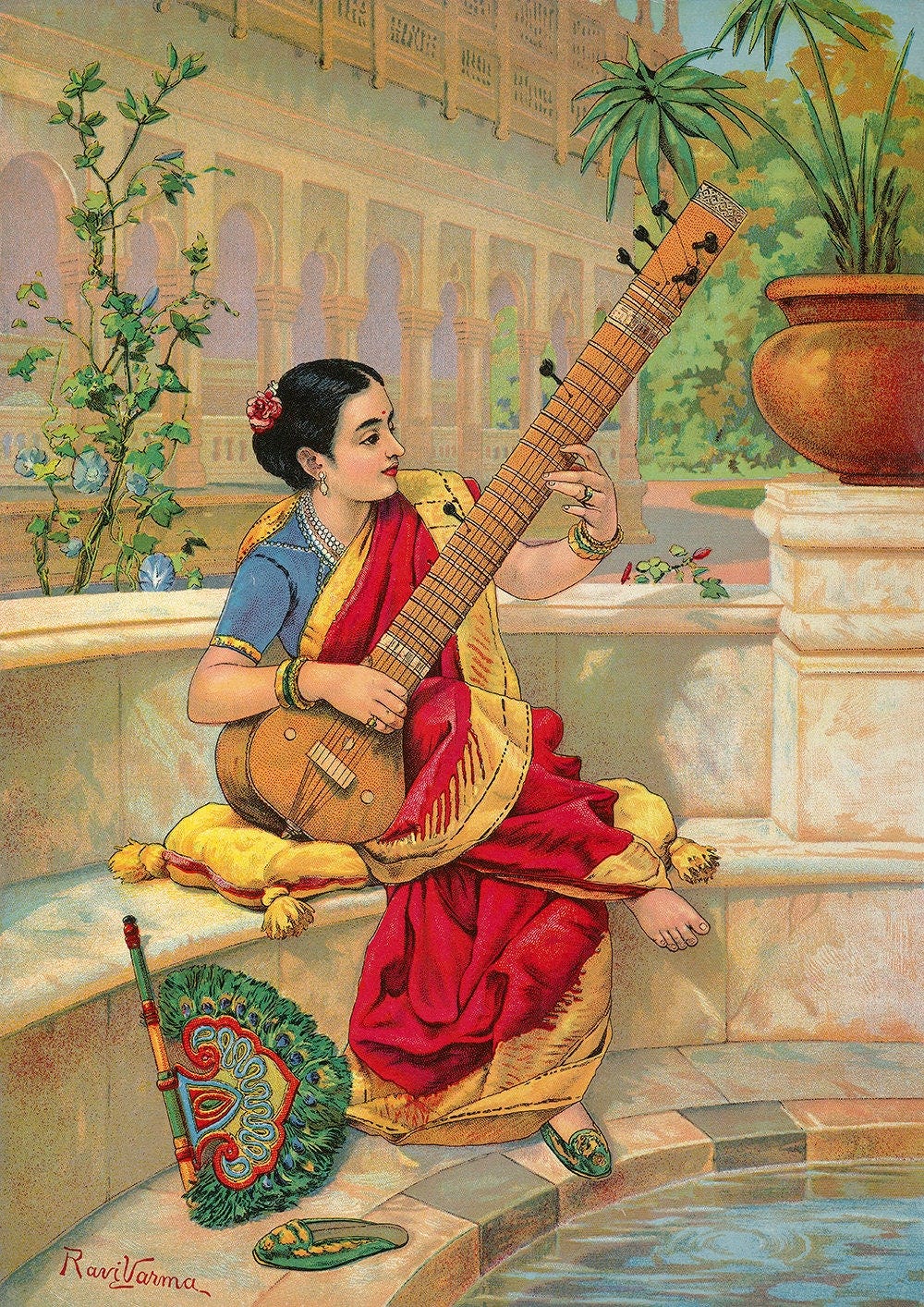
If you’ve sat in on a session with an Indian classical musician — a sitar player, a vocalist performing in a raga, a vina player — you may have noticed something peculiar. The pitches don’t quite line up with the keys on a Western keyboard. Notes that “should” be a major third apart sound subtly, beautifully different from what you’re used to. That’s not imprecision. That’s the shruti system, one of the oldest and most sophisticated pitch frameworks in the world. And if you’re a Western musician wanting to genuinely play with those musicians — not just alongside them — you need a tuning system that actually speaks the same language.
This article is about why a 22-note scale called Magic[22], tuned in a system called 41edo, is a remarkably good candidate for that conversation. And why the more obvious-seeming choice — 22edo — actually falls short in some important ways.
If you’ve sat in on a session with an Indian classical musician — a sitar player, a vocalist performing in a raga, a vina player — you may have noticed something peculiar. The pitches don’t quite line up with the keys on a Western keyboard. Notes that “should” be a major third apart sound subtly, beautifully different from what you’re used to. That’s not imprecision. That’s the shruti system, one of the oldest and most sophisticated pitch frameworks in the world. And if you’re a Western musician wanting to genuinely play with those musicians — not just alongside them — you need a tuning system that actually speaks the same language.
This article is about why a 22-note scale called Magic[22], tuned in a system called 41edo, is a remarkably good candidate for that conversation. And why the more obvious-seeming choice — 22edo — actually falls short in some important ways.
First: What Is a Shruti?
Indian classical music, whether the Carnatic tradition of the south or the Hindustani tradition of the north, is built on a concept called the shruti. The shruti is the smallest interval of pitch that the human ear can detect and a singer or musical instrument can produce. The concept is found in ancient Sanskrit texts such as the Natya Shastra. The Natya Shastra identifies and discusses twenty-two shrutis and seven swara per octave.
Think of the seven swara as analogous to the seven notes of a Western scale (Do Re Mi…). The 22 shrutis are the finer grid beneath those seven notes — the precise tuning positions from which the swara are drawn. Different ragas use different shrutis, which is a big part of why they each have such a distinct emotional character.
Indian classical music relies on a sophisticated microtonal system of 22 shrutis, which provides expressive nuance beyond the 12-tone equal temperament system.
The 22-shruti system isn’t arbitrary. The knowledge of the 22 shrutis was obtained by working out cycles of fifths and fourths to their logical conclusions. The early perception of the highly concordant notes, panchama (3/2 or 702 cents) and madhyama (4/3 or 498 cents), led scholars to work out these cycles. In other words, the shrutis are rooted in pure acoustic mathematics — the same ratios (like 3/2 for the perfect fifth, 5/4 for the major third) that musicians have been tuning to by ear for millennia.
Indian classical music, whether the Carnatic tradition of the south or the Hindustani tradition of the north, is built on a concept called the shruti. The shruti is the smallest interval of pitch that the human ear can detect and a singer or musical instrument can produce. The concept is found in ancient Sanskrit texts such as the Natya Shastra. The Natya Shastra identifies and discusses twenty-two shrutis and seven swara per octave.
Think of the seven swara as analogous to the seven notes of a Western scale (Do Re Mi…). The 22 shrutis are the finer grid beneath those seven notes — the precise tuning positions from which the swara are drawn. Different ragas use different shrutis, which is a big part of why they each have such a distinct emotional character.
Indian classical music relies on a sophisticated microtonal system of 22 shrutis, which provides expressive nuance beyond the 12-tone equal temperament system.
The 22-shruti system isn’t arbitrary. The knowledge of the 22 shrutis was obtained by working out cycles of fifths and fourths to their logical conclusions. The early perception of the highly concordant notes, panchama (3/2 or 702 cents) and madhyama (4/3 or 498 cents), led scholars to work out these cycles. In other words, the shrutis are rooted in pure acoustic mathematics — the same ratios (like 3/2 for the perfect fifth, 5/4 for the major third) that musicians have been tuning to by ear for millennia.
Why Standard Western Tuning Doesn’t Cut It
Western music since roughly the 18th century has used a system called 12-tone equal temperament, or 12edo — 12 equally spaced notes per octave. It’s an elegant compromise that lets you play in any key without retuning. But it is a compromise. The major thirds in 12edo are 400 cents instead of 386, which is pretty sharp. A pure perfect fifth should be 702 cents wide; our current equal-tempered tuning accommodates perfect fifths at 700 cents, within 2 cents, but the thirds are way off and form audible beats.
For Indian classical music, the limitations of equal temperament for playing correct Indian music are obvious. The traditional Indian system is built on precise just intonation ratios — acoustically pure intervals — not equal temperament compromises. A tanpura drone rings with perfect fifths and fourths. When you play a “major third” on a standard Western keyboard against that drone, it clashes slightly. To a trained Indian musician’s ear, that clash is not subtle.
Western music since roughly the 18th century has used a system called 12-tone equal temperament, or 12edo — 12 equally spaced notes per octave. It’s an elegant compromise that lets you play in any key without retuning. But it is a compromise. The major thirds in 12edo are 400 cents instead of 386, which is pretty sharp. A pure perfect fifth should be 702 cents wide; our current equal-tempered tuning accommodates perfect fifths at 700 cents, within 2 cents, but the thirds are way off and form audible beats.
For Indian classical music, the limitations of equal temperament for playing correct Indian music are obvious. The traditional Indian system is built on precise just intonation ratios — acoustically pure intervals — not equal temperament compromises. A tanpura drone rings with perfect fifths and fourths. When you play a “major third” on a standard Western keyboard against that drone, it clashes slightly. To a trained Indian musician’s ear, that clash is not subtle.
Enter the 22-Shruti Connection — and Why 22edo Seems Like an Obvious Fix
Here’s where things get interesting for microtonally minded musicians. The Indian system has 22 shrutis per octave. There exists a Western equal temperament system with — you guessed it — 22 equal steps per octave. It’s called 22edo (22 equal divisions of the octave). Could it be the missing bridge?
The answer is: sort of, but not really. The traditional Indian 22-shruti system has been approximated by 22edo, though the traditional tuning system is unequal.
That word “unequal” is the crux of the problem. The 22 shrutis in Indian classical music are not 22 equal steps. They come in three distinct sizes — roughly corresponding to the ratios 9/8 (a large whole tone), 10/9 (a small whole tone), and 16/15 (a semitone). The system is explicitly hierarchical: the article on the Xenharmonic Wiki about Magic[22] as srutis lays out the traditional conditions clearly — the major whole tone 9/8 gets four shrutis, 10/9 gets three shrutis, and 16/15 gets two shrutis, totalling 22. And critically: these three intervals are always distinguishably different in size, with 9/8 > 10/9 > 16/15.
22edo, by contrast, makes all 22 steps identical. 22edo does not temper out the syntonic comma of 81/80, and therefore distinguishes the two whole tones 9/8 and 10/9. Indeed, these distinctions are exaggerated in comparison to 5-limit just intonation. So 22edo does preserve some of the right distinctions. But it has another serious problem: its perfect fifth is significantly out of tune.
The 22edo approximation to the perfect fifth (3/2) is approximately 709 cents — about 7 cents sharp compared to the just value of 702 cents. Seven cents might not sound like much, but against a ringing tanpura drone tuned to perfect fifths, it’s noticeable and uncomfortable. And since the whole shruti system is built on chains of perfect fifths and fourths, getting the fifth wrong throws off the entire architecture.
Here’s where things get interesting for microtonally minded musicians. The Indian system has 22 shrutis per octave. There exists a Western equal temperament system with — you guessed it — 22 equal steps per octave. It’s called 22edo (22 equal divisions of the octave). Could it be the missing bridge?
The answer is: sort of, but not really. The traditional Indian 22-shruti system has been approximated by 22edo, though the traditional tuning system is unequal.
That word “unequal” is the crux of the problem. The 22 shrutis in Indian classical music are not 22 equal steps. They come in three distinct sizes — roughly corresponding to the ratios 9/8 (a large whole tone), 10/9 (a small whole tone), and 16/15 (a semitone). The system is explicitly hierarchical: the article on the Xenharmonic Wiki about Magic[22] as srutis lays out the traditional conditions clearly — the major whole tone 9/8 gets four shrutis, 10/9 gets three shrutis, and 16/15 gets two shrutis, totalling 22. And critically: these three intervals are always distinguishably different in size, with 9/8 > 10/9 > 16/15.
22edo, by contrast, makes all 22 steps identical. 22edo does not temper out the syntonic comma of 81/80, and therefore distinguishes the two whole tones 9/8 and 10/9. Indeed, these distinctions are exaggerated in comparison to 5-limit just intonation. So 22edo does preserve some of the right distinctions. But it has another serious problem: its perfect fifth is significantly out of tune.
The 22edo approximation to the perfect fifth (3/2) is approximately 709 cents — about 7 cents sharp compared to the just value of 702 cents. Seven cents might not sound like much, but against a ringing tanpura drone tuned to perfect fifths, it’s noticeable and uncomfortable. And since the whole shruti system is built on chains of perfect fifths and fourths, getting the fifth wrong throws off the entire architecture.
What Is 41edo, and Why Does It Do Better?
41edo divides the octave into 41 equal steps, each about 29.3 cents wide. It sounds intimidating — 41 notes! — but you don’t use all of them at once, any more than a pianist uses all 88 keys in a single piece.
41edo is the second smallest equal division whose perfect fifth is closer to just intonation than that of 12edo. Specifically, 41edo’s perfect fifth lands at about 702.4 cents — essentially indistinguishable from the pure 702-cent fifth. That’s a crucial improvement over 22edo’s 709-cent fifth.
Carnatic music, which is normally based on a 22-note unequal scale, has found some use from 22edo as a good approximation, but 41 offers another option with Magic[22], which not only represents 22edo closely, but preserves accurate perfect fifths and the unequal quality of a more typical Carnatic scale.
That phrase — “preserves the unequal quality” — is the heart of the matter.
41edo divides the octave into 41 equal steps, each about 29.3 cents wide. It sounds intimidating — 41 notes! — but you don’t use all of them at once, any more than a pianist uses all 88 keys in a single piece.
41edo is the second smallest equal division whose perfect fifth is closer to just intonation than that of 12edo. Specifically, 41edo’s perfect fifth lands at about 702.4 cents — essentially indistinguishable from the pure 702-cent fifth. That’s a crucial improvement over 22edo’s 709-cent fifth.
Carnatic music, which is normally based on a 22-note unequal scale, has found some use from 22edo as a good approximation, but 41 offers another option with Magic[22], which not only represents 22edo closely, but preserves accurate perfect fifths and the unequal quality of a more typical Carnatic scale.
That phrase — “preserves the unequal quality” — is the heart of the matter.
Magic Temperament: Five Major Thirds Make a Fifth-Plus-Octave
To understand why Magic[22] in 41edo is special, you need to know a little about magic temperament. Don’t worry, the maths is simpler than it sounds.
In standard Western tuning, the major third (the interval from C to E, say) is roughly 400 cents. In pure acoustics, it’s 386 cents — slightly narrower. Magic temperament is a system where the major third is used as the primary generator, and tuned to approximately 380 cents. The defining trick of magic is this: stack five of those slightly-flattened major thirds on top of each other, and you arrive at a perfect twelfth (an octave plus a perfect fifth, the interval from C up to the G above middle C an octave higher). In pure acoustic terms, those five major thirds would overshoot the twelfth slightly; magic temperament closes that gap.
This is a genuinely elegant structure. It means magic scales can approximate the acoustically pure intervals (perfect fifths, major thirds, minor thirds) with impressive accuracy. In 41edo specifically, the magic generator is 13 steps — and the Xenharmonic Wiki article on magic notes that magic is the simplest mapping capable of tuning every 9-odd-limit interval better than in 12edo.
To understand why Magic[22] in 41edo is special, you need to know a little about magic temperament. Don’t worry, the maths is simpler than it sounds.
In standard Western tuning, the major third (the interval from C to E, say) is roughly 400 cents. In pure acoustics, it’s 386 cents — slightly narrower. Magic temperament is a system where the major third is used as the primary generator, and tuned to approximately 380 cents. The defining trick of magic is this: stack five of those slightly-flattened major thirds on top of each other, and you arrive at a perfect twelfth (an octave plus a perfect fifth, the interval from C up to the G above middle C an octave higher). In pure acoustic terms, those five major thirds would overshoot the twelfth slightly; magic temperament closes that gap.
This is a genuinely elegant structure. It means magic scales can approximate the acoustically pure intervals (perfect fifths, major thirds, minor thirds) with impressive accuracy. In 41edo specifically, the magic generator is 13 steps — and the Xenharmonic Wiki article on magic notes that magic is the simplest mapping capable of tuning every 9-odd-limit interval better than in 12edo.
Magic[22]: A 22-Note Scale That Mimics the Shrutis
Now here’s where it comes together. When you take 22 notes generated by that magic generator within 41edo, you get a scale called Magic[22]. This scale, as described in Gene Ward Smith’s analysis (quoted on the Xenharmonic Wiki), does something remarkable: it naturally produces the three unequal step sizes required by the authentic shruti system.
The Wikipedia article on Magic[22] as srutis spells this out precisely. Using 13 steps of 41edo as the generator, the scale step pattern comes out as:
2 2 1 2 2 2 2 2 2 1 2 2 2 2 2 2 1 2 2 2 2 2
The notes in cents are: 58.5, 117.1, 146.3, 204.9, 263.4, 322.0, 380.5, 439.0, 497.6, 526.8, 585.4, 643.9, 702.4, 761.0, 819.5, 878.0, 907.3, 965.9, 1024.4, 1082.9, 1141.5, 1200.0.
The step sizes 2 and 1 (in 41edo steps, meaning roughly 58.5 and 29.3 cents) create three differently-sized scale steps:
- A “2-step” = ~58.5 cents (approximately 16/15, the semitone)
- A “2+1” grouping gives slightly larger gaps
- Longer runs of 2s give the larger whole-tone regions
The resulting structure fits the traditional shruti pattern beautifully. The scale contains the Sa-grama — the ancient Indian mother scale — with its notes at 9/8, 5/4, 4/3, 3/2, 27/16, 15/8, and 2/1, all approximated with the accuracy that only 41edo’s near-perfect fifths can provide. The three step-size categories (large, medium, small) are preserved and distinguishable, as the authentic system requires. And the scale is unequal, as the tradition demands.
The pattern between the key notes of the Sa-grama follows the traditional groupings:
- From Sa (1) to Re (9/8): steps 2212
- From Re to Ga (5/4): steps 222
- From Ga to Ma (4/3): steps 22
- From Ma to Pa (3/2): steps 1222
- From Pa to Dha (27/16): steps 2221
- From Dha to Ni (15/8): steps 222
- From Ni to Sa (2): steps 22
This mirrors the classical description of the shruti groupings almost exactly.
Now here’s where it comes together. When you take 22 notes generated by that magic generator within 41edo, you get a scale called Magic[22]. This scale, as described in Gene Ward Smith’s analysis (quoted on the Xenharmonic Wiki), does something remarkable: it naturally produces the three unequal step sizes required by the authentic shruti system.
The Wikipedia article on Magic[22] as srutis spells this out precisely. Using 13 steps of 41edo as the generator, the scale step pattern comes out as:
2 2 1 2 2 2 2 2 2 1 2 2 2 2 2 2 1 2 2 2 2 2
The notes in cents are: 58.5, 117.1, 146.3, 204.9, 263.4, 322.0, 380.5, 439.0, 497.6, 526.8, 585.4, 643.9, 702.4, 761.0, 819.5, 878.0, 907.3, 965.9, 1024.4, 1082.9, 1141.5, 1200.0.
The step sizes 2 and 1 (in 41edo steps, meaning roughly 58.5 and 29.3 cents) create three differently-sized scale steps:
- A “2-step” = ~58.5 cents (approximately 16/15, the semitone)
- A “2+1” grouping gives slightly larger gaps
- Longer runs of 2s give the larger whole-tone regions
The resulting structure fits the traditional shruti pattern beautifully. The scale contains the Sa-grama — the ancient Indian mother scale — with its notes at 9/8, 5/4, 4/3, 3/2, 27/16, 15/8, and 2/1, all approximated with the accuracy that only 41edo’s near-perfect fifths can provide. The three step-size categories (large, medium, small) are preserved and distinguishable, as the authentic system requires. And the scale is unequal, as the tradition demands.
The pattern between the key notes of the Sa-grama follows the traditional groupings:
- From Sa (1) to Re (9/8): steps 2212
- From Re to Ga (5/4): steps 222
- From Ga to Ma (4/3): steps 22
- From Ma to Pa (3/2): steps 1222
- From Pa to Dha (27/16): steps 2221
- From Dha to Ni (15/8): steps 222
- From Ni to Sa (2): steps 22
This mirrors the classical description of the shruti groupings almost exactly.
The Problem With 22edo’s Shrutis
In 22edo, all 22 steps are identical — each is 54.5 cents. You can count 22 notes, but the three-tier distinction between the large whole tone (9/8), the small whole tone (10/9), and the semitone (16/15) is blurred into uniformity. The authentic shruti system requires that 9/8 > 10/9 > 16/15 be distinguishably different; in 22edo, they’re all the same size. That’s structurally incompatible with the traditional framework.
Furthermore, because 22edo’s perfect fifth is 7 cents sharp, the notes that derive from stacking fifths (the backbone of the shruti system) are systematically displaced from where they need to be.
Magic[22] in 41edo gives you the right shape — three distinguishable step sizes — with the right accuracy — near-perfect fifths and major thirds.
In 22edo, all 22 steps are identical — each is 54.5 cents. You can count 22 notes, but the three-tier distinction between the large whole tone (9/8), the small whole tone (10/9), and the semitone (16/15) is blurred into uniformity. The authentic shruti system requires that 9/8 > 10/9 > 16/15 be distinguishably different; in 22edo, they’re all the same size. That’s structurally incompatible with the traditional framework.
Furthermore, because 22edo’s perfect fifth is 7 cents sharp, the notes that derive from stacking fifths (the backbone of the shruti system) are systematically displaced from where they need to be.
Magic[22] in 41edo gives you the right shape — three distinguishable step sizes — with the right accuracy — near-perfect fifths and major thirds.
What This Means Practically for Musicians
If you’re a guitarist, keyboardist, or wind player interested in actually playing with Indian classical musicians, here’s what the above means in practical terms:
The tanpura drone will sound good with you. The tanpura rings sustained perfect fifths and octaves. 41edo’s fifths are accurate enough that you won’t generate that slow, seasick beating that a 22edo instrument would produce.
The three sizes of step feel musically natural. In the authentic shruti system, the three step sizes aren’t just a theoretical nicety — they create the characteristic melodic tension and resolution that gives ragas their emotional life. A scale with three distinguishable step sizes gives you that same expressive vocabulary.
You use 22 notes, not 41. Magic[22] is a 22-note subset of 41edo — chosen by the magic generator logic. You’re not expected to navigate 41 notes simultaneously. Think of it like how a guitarist on a 24-fret guitar doesn’t use all 24 frets in every piece.
Instruments exist. The Kite Guitar uses every other step of 41edo (making it 20.5edo per string effectively) and is a real, playable instrument. Microtonally-enabled synthesizers and software (including Scala, Surge XT, and others) can be tuned to 41edo with a few clicks.
If you’re a guitarist, keyboardist, or wind player interested in actually playing with Indian classical musicians, here’s what the above means in practical terms:
The tanpura drone will sound good with you. The tanpura rings sustained perfect fifths and octaves. 41edo’s fifths are accurate enough that you won’t generate that slow, seasick beating that a 22edo instrument would produce.
The three sizes of step feel musically natural. In the authentic shruti system, the three step sizes aren’t just a theoretical nicety — they create the characteristic melodic tension and resolution that gives ragas their emotional life. A scale with three distinguishable step sizes gives you that same expressive vocabulary.
You use 22 notes, not 41. Magic[22] is a 22-note subset of 41edo — chosen by the magic generator logic. You’re not expected to navigate 41 notes simultaneously. Think of it like how a guitarist on a 24-fret guitar doesn’t use all 24 frets in every piece.
Instruments exist. The Kite Guitar uses every other step of 41edo (making it 20.5edo per string effectively) and is a real, playable instrument. Microtonally-enabled synthesizers and software (including Scala, Surge XT, and others) can be tuned to 41edo with a few clicks.
A Note on Shrutar
The Xenharmonic Wiki article also mentions a related scale called Shrutar[22], derived from the shrutar temperament (the 22&46 temperament), which produces a slightly different distribution of steps. Instead of the magic step pattern, shrutar uses groups of four 46edo steps for the 9/8 interval and varies the pattern for 10/9. Both Magic[22] and Shrutar[22] are valid interpretations of the shruti framework — but Magic[22] in 41edo has the advantage of being tunable on an instrument (41edo) that is already well-documented, well-supported by software, and well-regarded for its overall harmonic accuracy.
The Xenharmonic Wiki article also mentions a related scale called Shrutar[22], derived from the shrutar temperament (the 22&46 temperament), which produces a slightly different distribution of steps. Instead of the magic step pattern, shrutar uses groups of four 46edo steps for the 9/8 interval and varies the pattern for 10/9. Both Magic[22] and Shrutar[22] are valid interpretations of the shruti framework — but Magic[22] in 41edo has the advantage of being tunable on an instrument (41edo) that is already well-documented, well-supported by software, and well-regarded for its overall harmonic accuracy.
The Bottom Line
The number 22 in Indian music and the number 22 in 22edo are a coincidence that turns out to be more misleading than helpful. The authentic shruti system is built on unequal steps, pure fifths, and a three-tier hierarchy of interval sizes. 22edo preserves none of these properties well.
Magic[22] in 41edo, on the other hand, delivers all three. It produces 22 notes with three distinguishable step sizes, a near-perfect fifth, and accurate approximations to the pure acoustic ratios that are the foundation of Indian classical music. It was specifically identified by the tuning theorist Gene Ward Smith as one of the most musically interesting ways to realise the shruti system in a mathematically coherent temperament.
If you’re a Western musician serious about musical dialogue with the Indian classical tradition — not just playing over it, but genuinely inside it — Magic[22] in 41edo is worth your serious attention. The theory is there. The software tools are there. The instruments are being built. The only thing missing is you.
For further reading, the Xenharmonic Wiki is an excellent resource. Relevant articles include Magic temperament, 41edo, 22edo, Magic22 as srutis, and Indian music.
The number 22 in Indian music and the number 22 in 22edo are a coincidence that turns out to be more misleading than helpful. The authentic shruti system is built on unequal steps, pure fifths, and a three-tier hierarchy of interval sizes. 22edo preserves none of these properties well.
Magic[22] in 41edo, on the other hand, delivers all three. It produces 22 notes with three distinguishable step sizes, a near-perfect fifth, and accurate approximations to the pure acoustic ratios that are the foundation of Indian classical music. It was specifically identified by the tuning theorist Gene Ward Smith as one of the most musically interesting ways to realise the shruti system in a mathematically coherent temperament.
If you’re a Western musician serious about musical dialogue with the Indian classical tradition — not just playing over it, but genuinely inside it — Magic[22] in 41edo is worth your serious attention. The theory is there. The software tools are there. The instruments are being built. The only thing missing is you.
For further reading, the Xenharmonic Wiki is an excellent resource. Relevant articles include Magic temperament, 41edo, 22edo, Magic22 as srutis, and Indian music.
Comments
Post a Comment