Most music we hear or play today uses 12 equally-spaced notes, which repeat every octave. This is called “12-equal temperament” or “12edo” (12 equal divisions of the octave).
But what if we divide the octave into 33 equal parts, instead of 12? Then we get 33edo.
33edo is like a parallel musical universe to 12edo: it has its own new and different scales and chords, it can do some things 12edo can’t, but it also can’t do some things 12edo can.
How to use this page
This page gives you tasters of different approaches to using 33edo. If one section of this page catches your interest, then feel free to skip ahead to that section first.
33edo is barely-explored musical territory, so the rules are loose: start wherever you fancy and break new musical ground!
Resources to learn 33edo
- Xen Wiki has a page on 33edo: https://en.xen.wiki/w/33edo
- Music theorist Chris Vaisvil has a page on 33edo: https://www.chrisvaisvil.com/category/tuning/33edo/
Music example: ‘Enchanted Shopping Mall’ by Budjarn Lambeth
https://m.youtube.com/watch?v=scCuGXnj5IY
This warm synthwave piece uses the “flattertone[7] major scale”, a scale that’s kind of halfway between the familiar major scale and the (to the Western ear) exotic equiheptatonic scale.
In cents, the scale is:
- 181.8
- 363.6
- 509.1
- 690.9
- 872.7
- 1054.5
- 1200.0
Music example: ‘Mysteries of Thirty-Three’ by Xeno Ov Eleas
https://m.youtube.com/watch?v=EPB1Rzjwguk
This dark piece for harp, percussion and synthesizer is built around 33edo’s augmented chord, which allows for modulations into microtonal keys unavailable in 12edo (think like that stunning modulation in Jacob Colliers ‘In the Bleak Midwinter’, but a whole piece that’s like that).
Play 33edo on guitar
You can tune a guitar to any equal-step tuning, including 33edo, by using “skip fretting”. Check out the Xen Wiki page on skip fretting: https://en.xen.wiki/w/Skip_fretting
Play 33edo with the human voice or fretless instruments
The human voice, and any fretless instruments (e.g. violin) are already physically capable of playing any tuning system.
You will need to develop ear training and muscle memory.
Unfortunately there aren’t yet good resources for this – maybe you can be the first to develop them!
Play 33edo’s “flattertone[12] scale” on piano keyboard
The “flattertone[12]” scale is a scale sort of similar to 12edo, except that there are two different sizes of every interval. This means that some keys are unusable, but other keys have cool new notes added that are about a quarter tone away from anything in 12edo.
You can tune a piano keyboard to the flattertone[12] scale. In cents, that is:
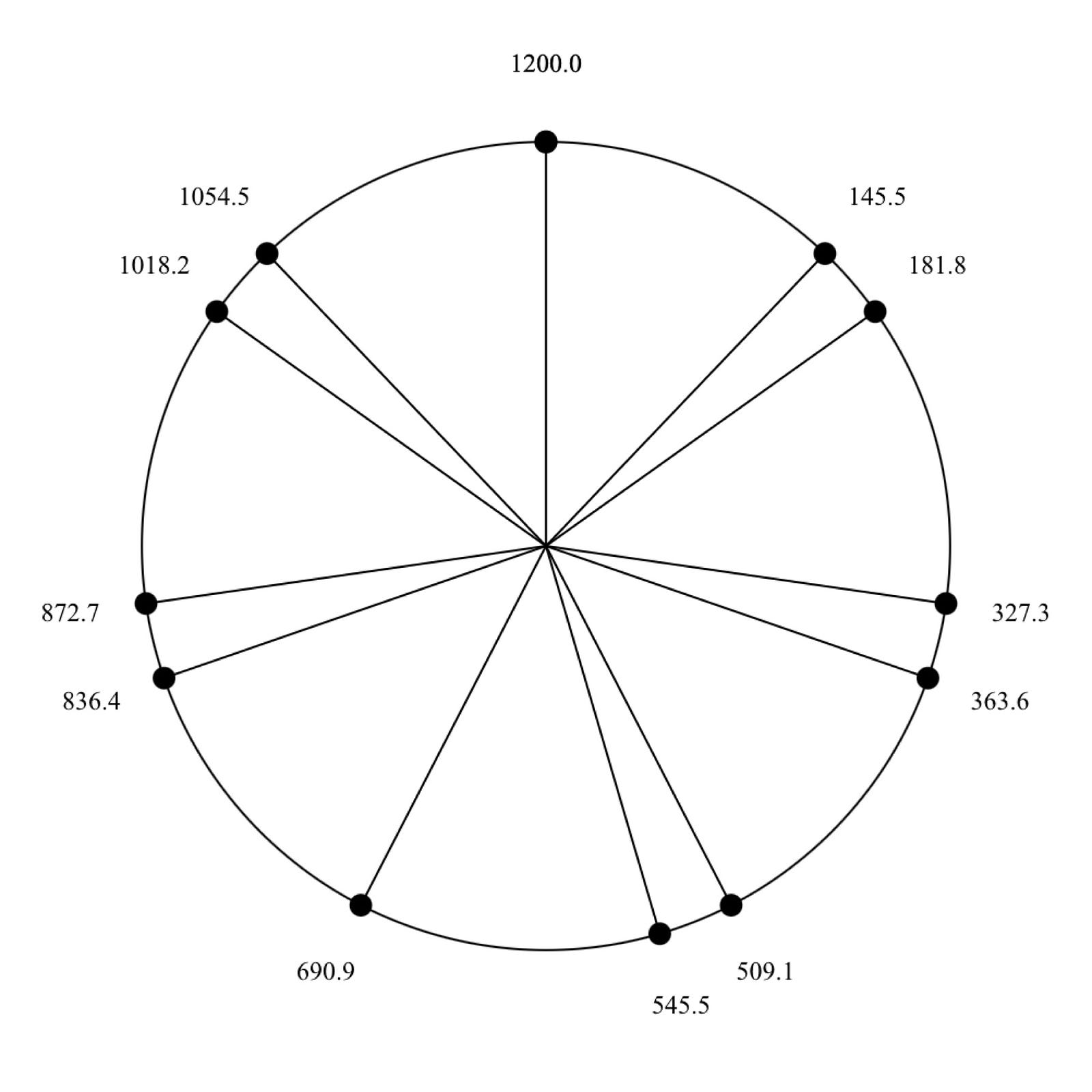
It approximates the just intonation intervals:
- 12/11 (instead of 12edo’s 16/15)
- 10/9 (instead of 12edo’s 9/8)
- 6/5
- 5/4
- 4/3
- 11/8 (instead of 12edo’s 17/12)
- 3/2
- 8/5
- 5/3
- 9/5
- 11/6 (instead of 12edo’s 15/8)
- 2/1
Play 33edo’s “august[12] scale” on piano keyboard
The “august[12]” scale is a scale very similar to 12edo. Again there are two different sizes of every interval, but they stray less far away than flattertone. Some keys are unusable, but others have some cool new notes added that resemble the 7/5 “blue note” or the 7/4 “barbershop 7th”.
The core structure of this scale is the augmented chord.
You can tune a piano keyboard to the august[12] scale. In cents, that is:
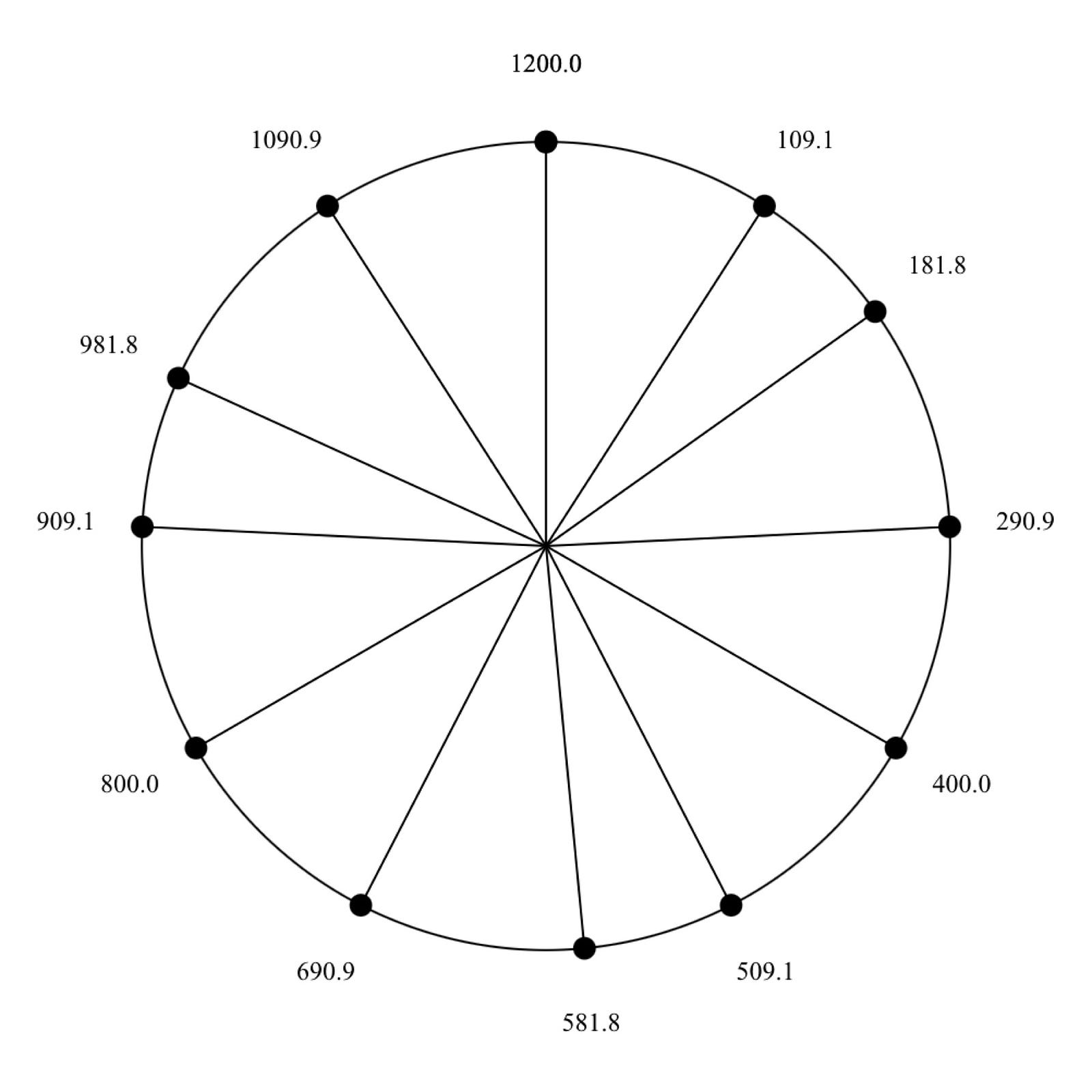
It approximates the just intonation intervals:
- 16/15
- 10/9 (instead of 12edo’s 9/8)
- 13/11 (instead of 12edo’s 6/5)
- 5/4
- 4/3
- 7/5 (instead of 12edo’s 17/12)
- 3/2
- 8/5
- 5/3
- 7/4 (instead of 12edo’s 9/5)
- 15/8
- 2/1
Play 33edo’s “blended slurpee scale” on piano keyboard
The “blended slurpee scale” (silly name, I know) is quite a weird and wacky scale. It’s an example of a “modified MOS scale” (see https://en.xen.wiki/w/Modmos).
You can tune a piano keyboard to the blended slurpee scale. In cents, that is:
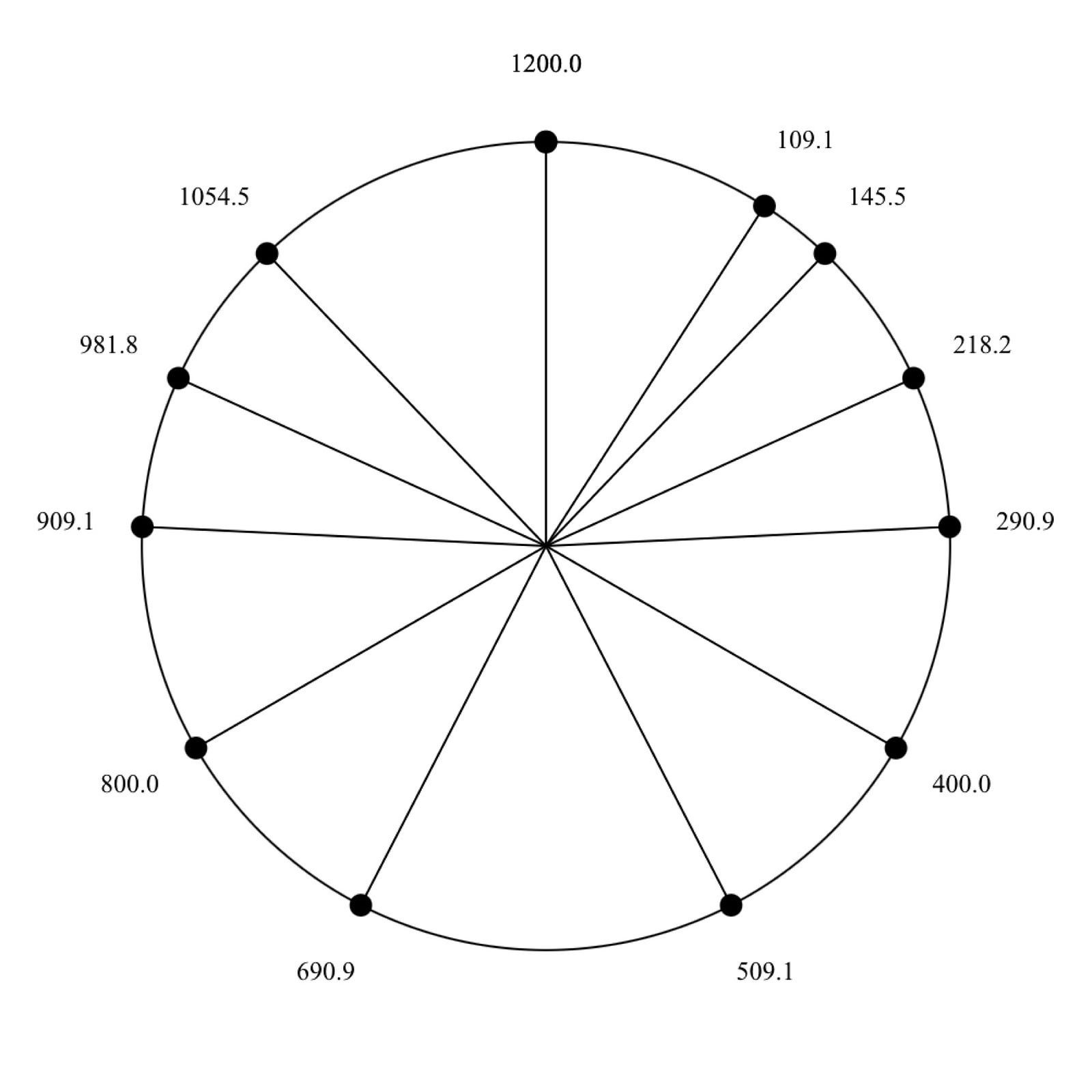
It approximates the just intonation intervals:
- 16/15
- 12/11 (in between 12edo’s 16/15 and 9/8)
- 13/11 (instead of 12edo’s 6/5)
- 5/4
- 4/3
- 3/2 (no tritone, skips straight to the fifth)
- 8/5
- 5/3
- 7/4 (instead of 12edo’s 9/5)
- 11/6 (instead of 12edo’s 15/8)
- 2/1
Play 33edo’s “12-tone overtone scale” on piano keyboard
The “12-tone overtone scale” or “12afdo” is the scale made from the 12th, 13th, 14th… 24th harmonics you will hear from a vibrating string. In practice it’s hard to hear harmonics this high with the naked ear, but they are theoretically there.
It is a 23-limit pure just intonation scale, but you can temper it into 33edo. (See https://en.xen.wiki/w/Tempering).
You can tune a piano keyboard to the 12-tone overtone scale approximated into 33edo. In cents, that is:
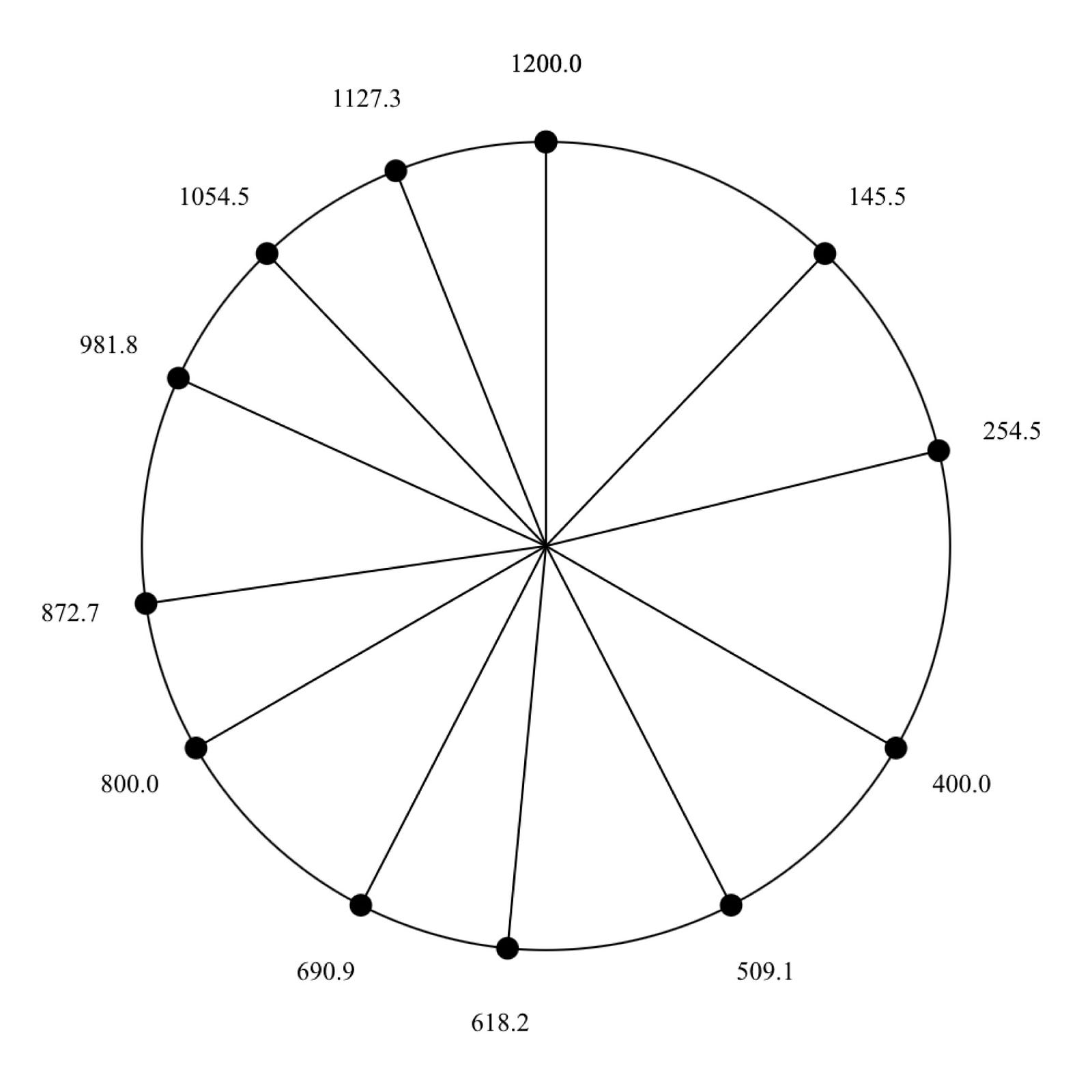
It approximates the just intonation intervals:
- 13/12 (between 12edo’s 16/15 and 9/8)
- 7/6 (instead of 12edo’s 6/5)
- 5/4
- 4/3
- 17/12
- 3/2
- 19/12 (instead of 12edo’s 8/5)
- 5/3
- 7/4 (instead of 12edo’s 9/5)
- 11/6 (between 12edo’s 9/5 and 15/8)
- 23/12 (instead of 12edo’s 15/8)
- 2/1
Play 33edo’s “elevenplus scale” on piano keyboard
The “elevenplus scale” is originally from 22edo, but it can also be used in 33edo. It is just 11edo, but with a perfect fifth added to make it 12 notes.
You can tune a piano keyboard to the 33edo version of the elevenplus scale. In cents, that is:
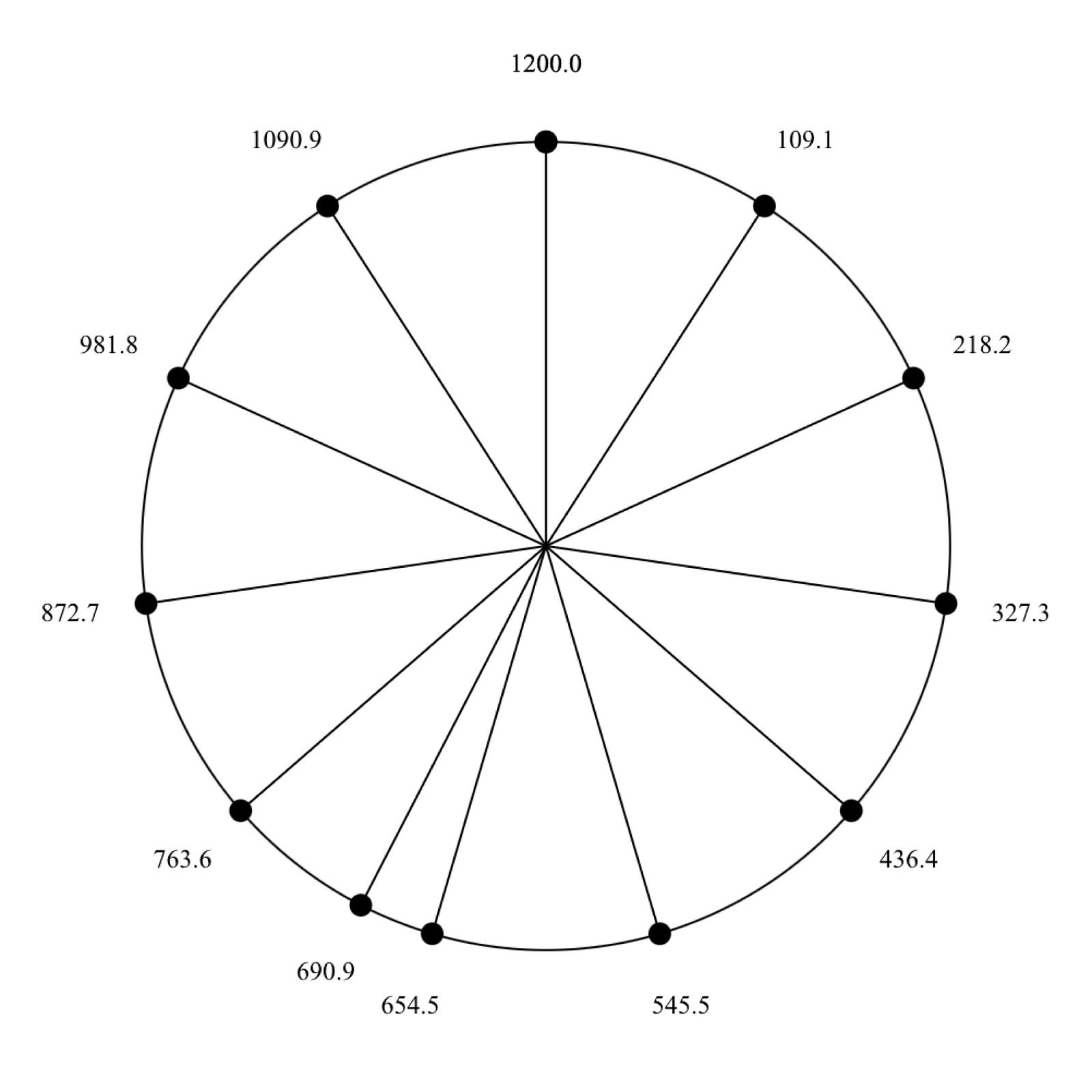
It approximates the just intonation intervals:
- 16/15
- 9/8 or 8/7 (instead of 12edo’s 9/8)
- 6/5
- 9/7 (instead of 12edo’s 5/4)
- 11/8 (instead of 12edo’s 4/3)
- 16/11 (instead of 12edo’s 17/12)
- 3/2
- 14/9 or 11/7 (instead of 12edo’s 8/5)
- 5/3
- 7/4 (instead of 12edo’s 9/5)
- 15/8
- 2/1
Play 33edo on any three retunable 12-note instruments
- Tune the first instrument to the above elevenplus scale with A = 430.854Hz.
- Tune the second instrument to the elevenplus scale with A = 440Hz.
- Tune the third instrument to the elevenplus scale with A = 449.340Hz.
Now every note of 33edo is accessible on at least one of the instruments.
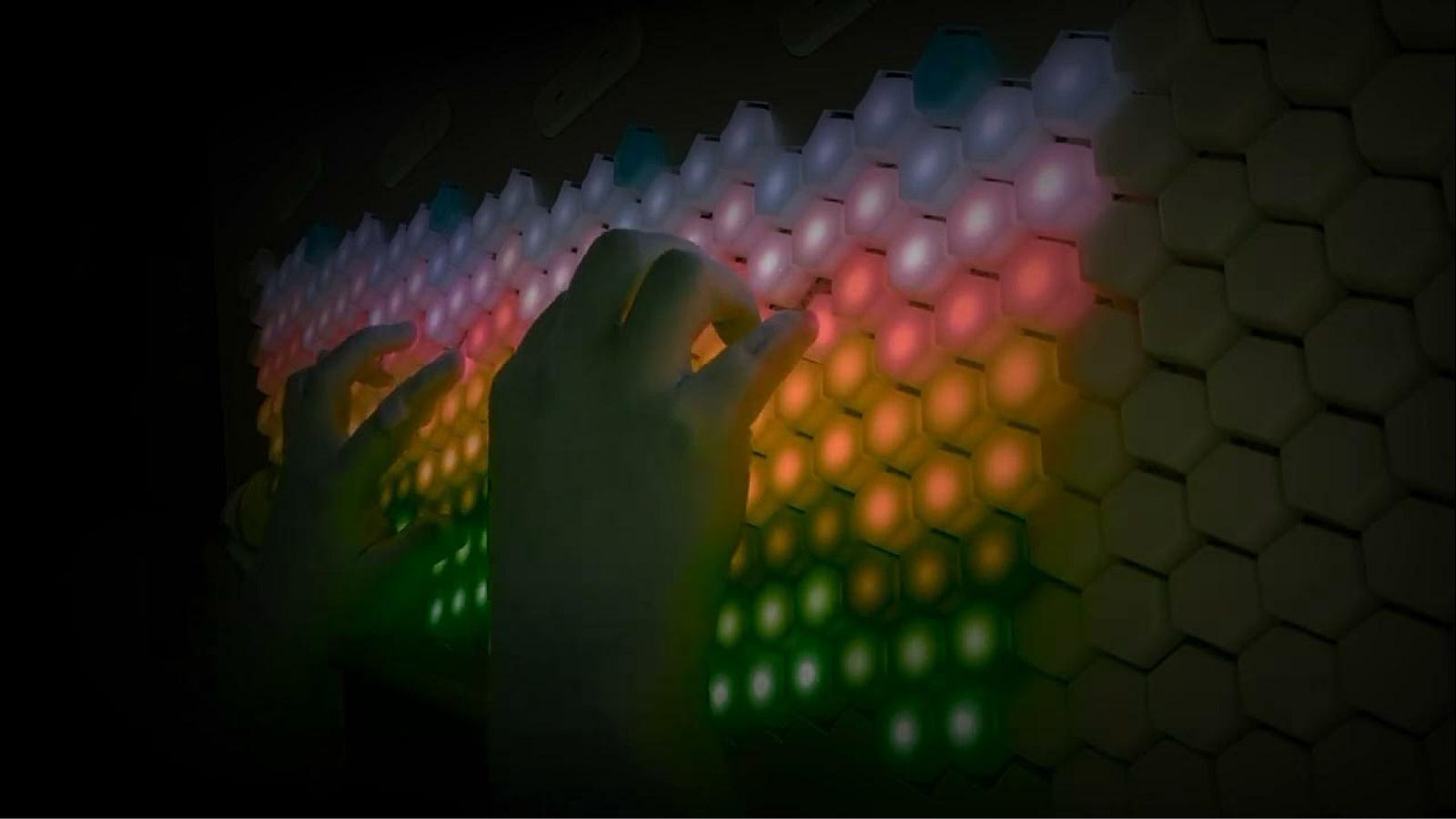
Have a Lumatone? You can play 33edo on it!
The Lumatone is an instrument built for making microtonal music. If you have a Lumatone, you can tune it to 33edo using one of the Lumatone mappings listed on the Xen Wiki: https://en.xen.wiki/w/Lumatone_mapping_for_33edo
If you want a Lumatone, you can get one from Lumatone’s store: https://www.lumatone.io/
I am not sponsored by Lumatone, I receive no commission from them, nor am I affiliated with Lumatone in any way. I just like their instrument.
Credits
- Cover image – Bryan Deister
- Scale diagrams made using the Scale Circle software by Nick Vuci: https://nickvuci.github.io/ScaleCircle/
Comments
Post a Comment