72-equal temperament (72edo): the secret system used by both Byzantine monks and modern experimental producers
If you’ve ever heard a string quartet tune with painful precision before a concert, or noticed how a blues guitarist bends a note to somewhere between a minor and major third, you’ve already heard intervals that standard notation can’t quite describe. 72 equal divisions of the octave — 72edo for short — is a tuning system built to name and use exactly those in-between places, while keeping everything familiar about standard music theory completely intact.
This article is for musicians who know their way around a key signature but are new to microtones. We’ll walk through what 72edo actually is, why it’s unusually well-suited as a first step into microtonality, what kinds of harmony it unlocks, and how real composers have used it.
What is 72edo?
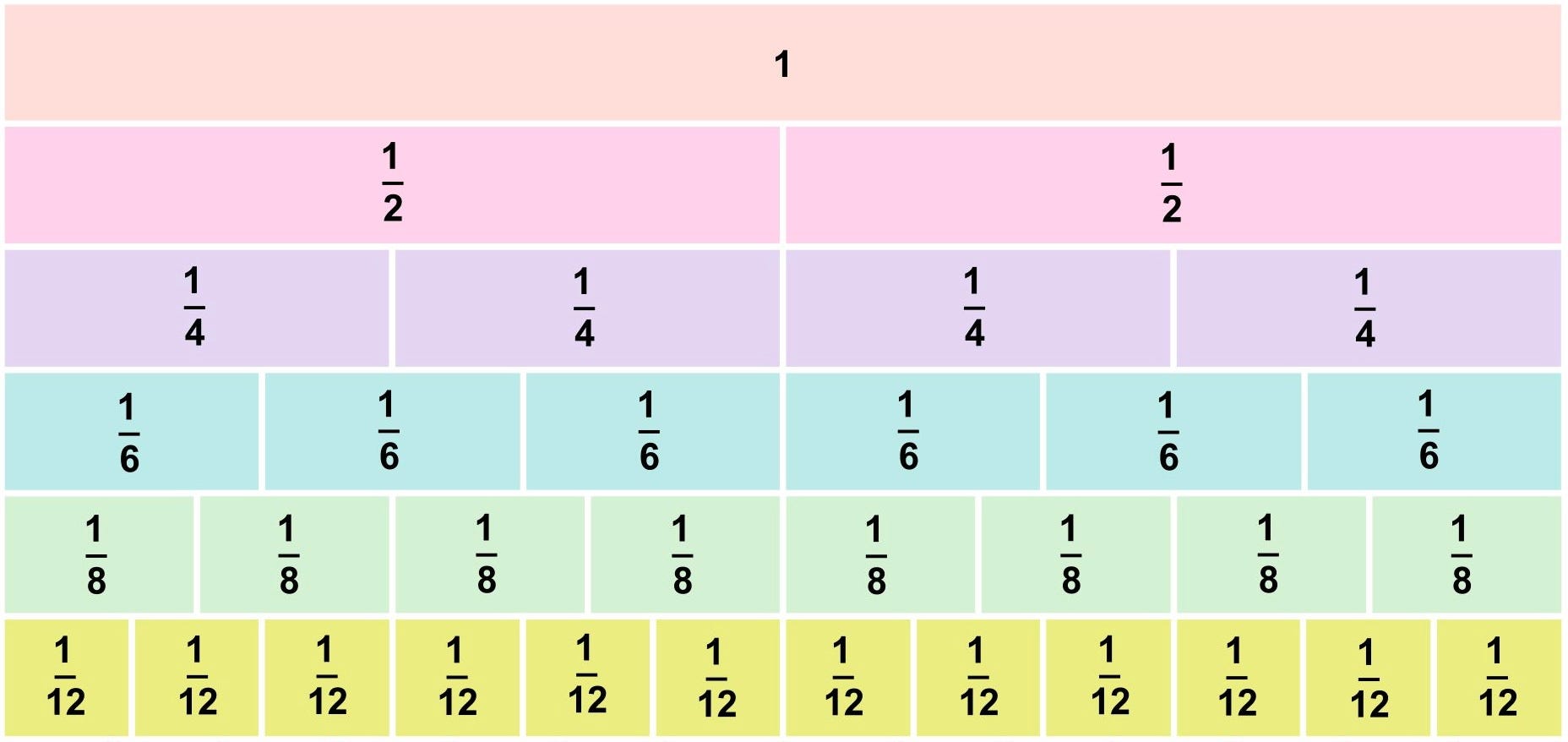
In standard Western tuning — 12edo — the octave is divided into 12 equal semitones of 100 cents each. In 72edo, the octave is divided into 72 equal steps of approximately 16.67 cents each. Because 72 = 12 × 6, every single note you already know is still right there in 72edo: C, C#, D, Eb, and so on are all present, sitting exactly where they always were. You haven’t lost anything. You’ve simply gained five new notes between every pair of adjacent semitones.
Each step of 72edo has a name: a morion (plural moria). The term comes from Byzantine music theory, which independently arrived at the same 72-step division of the octave centuries ago and used it to notate the subtle pitch inflections in Orthodox chant.
Because 72 is also divisible by 2, 3, 4, 6, 8, 9, 18, 24, and 36, 72edo contains within it many other tuning systems as subsets — including 24edo (the quarter-tone system used in Arabic music), 36edo (sixth-tones), and 12edo itself. This makes it a remarkably inclusive system.
The Harmonic Series: Why 72edo Is Special
To understand why microtonalists get excited about 72edo specifically, you need a quick primer on the harmonic series.
When any note sounds, it produces not just its fundamental pitch but a series of overtones: frequencies at 2×, 3×, 4×, 5×, 6×, 7×, 8× (and so on) the fundamental. The intervals between these overtones — the perfect fifth, the major third, the minor seventh, and many others — are the acoustic raw material from which all harmony is built. In just intonation, you tune intervals to these exact harmonic ratios. The result sounds acoustically pure and beatless, but the math prevents you from easily transposing to other keys.
Standard 12edo is a compromise: it tempers (slightly adjusts) all those intervals so that every key works equally well. The cost is that none of the intervals are perfectly in tune. The major third in 12edo is about 14 cents sharp of its pure harmonic value — noticeable if you listen for it.
72edo does something remarkable: it approximates the harmonic series up to the 11th partial (and beyond) with tiny errors across the board. The perfect fifth is only 1.96 cents flat of pure. The major third is only 2.98 cents flat. The minor third is 1.03 cents sharp. The 7th harmonic (which gives you that classic blues seventh chord quality) is only 2.16 cents flat. The 11th harmonic, which generates that haunting sound halfway between a perfect fourth and a tritone, is only 1.32 cents flat.
To put that in perspective: differences smaller than about 5 cents are difficult for most people to detect melodically, and the practical limit of tuning accuracy for acoustic instruments is around 2 cents. 72edo fits almost entirely within both those thresholds.
The Xenharmonic Wiki describes 72edo as being “consistent in the 17-odd-limit” — meaning it handles complex harmonic ratios involving the prime numbers 2, 3, 5, 7, 11, 13, and 17 coherently and without contradiction. It is, by many measures, one of the finest equal temperaments ever devised for approximating natural acoustic harmony.
The New Intervals: What Do They Sound Like?
Between every pair of semitones you already know, 72edo places five additional pitches. Here’s a practical way to think about them, using the interval from C to D as an example.
Your familiar major second (C to D) sits at 200 cents, or 12 steps of 72edo. But the harmonic series contains several different kinds of “whole tone.” There’s the major tone (9:8 ratio, 204 cents), the minor tone (10:9 ratio, 182 cents), the septimal whole tone (8:7 ratio, 231 cents), and more. In 12edo, all of these are squashed into a single 200-cent slot. In 72edo, each one gets its own address.
The new intervals you gain access to include:
Quarter tones (3 steps, 50 cents): The halfway point between any two semitones. These are the standard addition in 24edo Arabic tuning. In 72edo they approximate the interval 36:35.
Sixth tones (2 steps, 33 cents): Finer subdivisions giving access to intervals like 49:48.
Twelfth tones (1 step, 17 cents): The smallest step, a single morion, approximating the interval 100:99. This is subtle enough to be at the edge of perception as a melodic interval, but important for harmonic accuracy.
The most musically dramatic new arrival is arguably the neutral third, sitting right between the minor and major thirds at 21 steps (350 cents). It approximates the ratio 11:9. This interval has a quality unlike anything in 12edo — neither major nor minor, ambiguous and luminous at the same time. It appears naturally in the overtone series (between the 9th and 11th harmonics), and is characteristic of Middle Eastern maqam scales, certain blues inflections, and the acoustic resonance of bells and brass instruments.
Similarly, the neutral second (between 150 and 167 cents), the septimal minor third (7:6, 267 cents), the harmonic seventh (7:4, 967 cents), and the undecimal tritone (11:8, 550 cents) all get precise representations that 12edo can only approximate crudely or not at all.
Your Familiar Chords, and Some New Ones
Because all 12edo intervals are preserved exactly in 72edo, every chord you know still works. But now each chord quality has close siblings that introduce new colors.
Take the major triad. In 72edo, the major third can be tuned as:
- 24 steps (400 cents) — the ordinary 12edo “quasi-tempered” major third, slightly sharp
- 23 steps (383 cents) — a closer approximation of the pure 5:4 ratio, somewhat softer and more “open” sounding
- 26 steps (433 cents) — the septimal major third, 9:7, a brighter, almost aggressive quality
Each of these produces a recognizably “major” triad but with a distinct harmonic character. The 5:4 version (23 steps) will sound warmer and more consonant than what you’re used to from a piano. The 9:7 version sounds intense and buzzing. These aren’t mistakes or out-of-tune notes — they’re distinct harmonic colors that exist in the overtone series and appear in acoustic instruments all the time, just never previously nameable in equal temperament.
The Xenharmonic Wiki uses “ups and downs” notation to name these distinctions. A regular major triad might be written “C E G” in 12edo. In 72edo, a triad using the softer 5:4 major third would be written “Cv E G” — “C down-major” — where the small arrow indicates the third sits one step below the standard 12edo major third position. This notation extends to chord symbols: “Cv” means a “down-major” chord, “C^m” means an “up-minor” chord, and so on.
The Harmonic Series in 72edo: A Worked Example
The Xenharmonic Wiki includes a striking table showing how Mode 8 of the harmonic series — the harmonics from 8 through 16 — maps onto 72edo. This is the “overtone scale,” a mode built entirely from the natural resonance of a vibrating string or air column.
Starting from a fundamental, the harmonics and their 72edo approximations are:
- 8th harmonic (1/1): step 0
- 9th harmonic (9:8, major tone): step 12 — exactly 200 cents
- 10th harmonic (5:4, major third): step 23–383 cents
- 11th harmonic (11:8, undecimal tritone): step 33–550 cents
- 12th harmonic (3:2, perfect fifth): step 42–700 cents
- 13th harmonic (13:8): step 50–833 cents
- 14th harmonic (7:4, harmonic seventh): step 58–967 cents
- 15th harmonic (15:8, major seventh): step 65–1083 cents
- 16th harmonic (2:1, octave): step 72–1200 cents
Every harmonic in this scale falls on a distinct 72edo step, and the approximation errors are all under 5 cents. This scale is genuinely playable and sounds unlike anything in 12edo — exotic, overtone-rich, and acoustically compelling.
Temperaments: The Deeper Structure
One of the most interesting things about 72edo is that it supports several remarkable regular temperaments — ways of organizing the notes into logical harmonic systems. Think of a temperament as a grammar that tells you which intervals belong together and how chords progress.
The most celebrated is Miracle temperament, discovered by George Secor in 1974. Miracle uses a generator of about 116.7 cents (7 steps of 72edo) — an interval that serves simultaneously as both the 15:14 and 16:15 semitone, two intervals that are tempered together. Stack two of these and you get a close approximation of 8:7. Stack six and you get a near-perfect 3:2 fifth. Miracle is extraordinarily efficient: it packs a dense collection of consonant intervals into a relatively small number of notes. A 21-note Miracle scale called Blackjack gives you at least one inversion of every interval in the 11-limit harmonic space within a comfortable reach.
Compton temperament is another system that lives naturally in 72edo. It takes the 12-note circle of fifths from 12edo and treats it as the backbone (the “3-limit”), while adding the 5th harmonic as a free generator. This gives you a very organized way to navigate harmonic space that remains legible to anyone who already understands circle-of-fifths harmony.
Catakleismic uses the minor third (6:5) as its generator, stacking it to reach an efficient lattice of 5-limit and 7-limit intervals. It is naturally supported by both 53edo and 72edo, and belongs to the same family as the historically important Hanson temperament.
Marvel temperament identifies the harmonic seventh (7:4) as the octave reduction of two stacked major sevenths (15:8), allowing 7-limit harmony to be handled within a structure that looks very similar to standard 5-limit just intonation. For a composer who already thinks in terms of major sevenths and stacked thirds, Marvel temperament makes 7-limit chords feel natural rather than foreign.
You don’t need to understand the mathematics of these systems to use 72edo. But knowing they exist means knowing that 72edo has deep logical structure beneath it — it isn’t just “12edo with some extra notes.”
Notation
One reason 72edo is accessible is that it can be notated in an extension of standard staff notation. The most common system adds small arrows to existing note heads:
- A single up arrow (^) raises a note by one step (one morion, ~17 cents)
- A single down arrow (v) lowers by one step
- Double up (^^) raises by two steps (~33 cents)
- Double down (vv) lowers by two steps
- Triple up (³) raises by three steps (~50 cents, a quarter tone)
These combine with the standard sharp and flat symbols to address all 72 positions. A half-sharp and half-flat can optionally replace the triple arrows to simplify notation.
There is also Sagittal notation, a more systematic microtonal notation using arrow-like symbols derived from the shapes of commas (the small interval differences between different harmonic ratios). Sagittal is more precise and scalable but has a steeper learning curve.
The jazz microtonal tradition associated with Joe Maneri and the Boston Microtonal Society uses the Maneri-Sims notation, which adds simple arrow-like accidentals before notes on a standard staff, designed to be as readable as possible for classically trained performers.
Who Has Used 72edo?
72edo has attracted composers from very different backgrounds.
Georg Friedrich Haas, the Austrian spectralist composer, used it in in vain (2000), a major 70-minute work for 24 musicians in which the tuning allows sustained chords built directly from the harmonic series, creating an acoustic luminosity that standard tuning cannot achieve.
Ezra Sims (1928–2015) was the central figure of a Boston-based microtonal world that treated 72edo as its lingua franca. Since the 1960s he wrote chamber music using a notation system with 12th-tone, 6th-tone, and quarter-tone inflections, exploring asymmetrical modes built from the higher harmonics.
James Tenney, one of the most important acoustic theorists of the late 20th century, used 72edo in works exploring just intonation approximation and spectral harmony.
Joe Maneri, a jazz saxophonist and improviser, pioneered 72edo in a jazz context — treating the microtonal steps not as approximations of just intonation but as freely available melodic and expressive colors, much as a blues musician bends notes intuitively. His work through the Boston Microtonal Society brought 72edo into the improvisational world.
Ivan Wyschnegradsky worked with sixth-tone systems throughout his career. His Arc-en-ciel (1956) for six pianos, each tuned a twelfth-tone apart from the last, effectively realizes a 72edo palette from standard instruments.
Byzantine chant has used a 72-moria framework for centuries, formalised by the Patriarchal Music Committee in Constantinople in 1881–83 as a way to notate the subtle pitch inflections of the echos modal system.
How Do You Play It?
The practical question. The most straightforward approach: any software synthesizer with custom tuning support (which includes most professional-grade VSTs) can be retuned to 72edo using a .scl (Scala) file, which you can generate or download freely. DAWs like Reaper have flexible microtonal MIDI routing. Software like Surge XT has built-in microtonal tuning.
For a physical instrument, the Lumatone isomorphic keyboard has a well-documented 72edo mapping (several, in fact — including a Miracle-temperament layout that puts the most consonant intervals physically close together on the board). The Lumatone mapping for 72edo is detailed on the Xenharmonic Wiki.
For a DIY option: if you have access to six standard 12edo instruments (six guitars, six keyboard players, six synthesizer tracks), you can tune each one a twelfth-tone (roughly 17 cents) apart from the last. Together, they cover the complete 72edo gamut. Ivan Wyschnegradsky used exactly this approach with six pianos.
A Good Place to Start
If you’re a musician curious about exploring 72edo, a few practical starting points:
The simplest entry is just the neutral third. Find a software synth, tune it to 72edo, and play a minor chord. Now raise the third by two steps (from the standard 12edo minor third position) and you’re at the neutral third — 11:9. Play it as a chord tone. Sit with how it sounds: like a major third that forgot to arrive, or a minor third that overreached. It’s genuinely new harmonic territory, and it’s right there between notes you already know.
From there, try building a scale starting on C using the steps of the harmonic overtone series as described above. This is called an otonal scale, and it sounds — unlike anything you’ll have heard from a keyboard before — simultaneously ancient and alien.
72edo is unusual in the microtonal world for being genuinely welcoming to trained musicians who aren’t ready to abandon everything they know. Your fifths still work. Your circle of fifths still works. Your major and minor triads still work. But now you can also tune a chord the way a string quartet tunes when they’re playing slowly and listening carefully — slightly, almost imperceptibly, towards something acoustically purer and more resonant than equal temperament usually allows.
That’s the promise of 72edo: not a new language, but a dramatically expanded vocabulary in one you already speak.
Further reading: the 72edo article on the Xenharmonic Wiki is comprehensive and includes interval tables, notation guides, scale resources, and links to music. The Miracle temperament article and Marvel temperament article are good next steps for the harmonic theory side.
Comments
Post a Comment