The best microtonal rock, metal, classical, jazz, and electronic musicians!
Microtonal music — often referred to as xenharmonic music — explores the “notes between the notes” of the standard 12-tone piano. This vast sonic frontier is populated by a diverse array of composers who use math, custom instruments, and retuned software to create everything from haunting classical soundscapes to heavy metal.
Contemporary Classical & Avant-Garde
Harry Partch: A pioneer who famously rejected the “standard” piano, calling it a “monstrous instrument.” He built his own orchestra of sculptural instruments (like the Cloud-Chamber Bowls) to play his 43-tone system.
- Music example: Daphne of the Dunes
- Wikipedia article: https://en.wikipedia.org/wiki/Harry_Partch
Ben Johnston: Known for his incredible string quartets, Johnston pushed the limits of notation to achieve high-limit Just Intonation, requiring performers to play intervals of extreme precision.
- Music example: String Quartet №4 “Amazing Grace”
- Wikipedia article: https://en.wikipedia.org/wiki/Ben_Johnston_(composer)
Easley Blackwood: A professor and composer who systematically explored every equal temperament from 13 to 24. His work serves as a “travel guide” to the unique moods of different tunings.
- Music example: 12 Microtonal Etudes, Op. 28
- Xen Wiki article: https://en.xen.wiki/w/Easley_Blackwood_Jr.
Wendy Carlos: While famous for Switched-On Bach, her album Beauty in the Beast is a masterpiece of microtonality, using non-octave scales like Alpha, Beta, and Gamma.
- Music example: Beauty in the Beast
- Wikipedia article: https://en.wikipedia.org/wiki/Wendy_Carlos
Lou Harrison: A bridge-builder who integrated Western classical forms with the Indonesian Gamelan, often tuning his instruments to ancient just scales.
- Music example: Concerto in Slendro
- Wikipedia article: https://en.wikipedia.org/wiki/Lou_Harrison
Kyle Gann: A composer and critic who uses Disklaviers (computer-controlled pianos) to perform textures too complex for human hands, notably in his 33-tone work Hyperchromatica.
- Music example: Hyperchromatica
- Xen Wiki article: https://en.xen.wiki/w/Kyle_Gann
Josh Modney: A contemporary violinist who specializes in “deep intonation,” performing works by Bach and modernists with a refined, microtonal ear.
- Music example: Engage
Jazz & Fusion
Anna Webber: A saxophonist and flutist whose work Shimmer Wince explores the harmonic series, using the “out of tune” overtones as the primary melodic language.
- Music example: Shimmer Wince
- Wikipedia article: https://en.wikipedia.org/wiki/Anna_Webber_(musician)
Mike Battaglia: A virtuoso of the Lumatone (a hexagonal microtonal keyboard), Battaglia blends jazz fusion with complex tunings like 31-EDO and 22-EDO.
- Music example: Mike Battaglia Lumatone Performance
- Xen Wiki article: https://en.xen.wiki/w/User:Mike_Battaglia
Jon Catler: A pioneer of “just” blues and jazz-rock, Catler uses custom-fretted guitars to play the “true” harmonic 7th and 11th intervals.
- Music example: Evolution
- Xen Wiki article: https://en.xen.wiki/w/Jon_Catler
Rock, Metal & Progressive
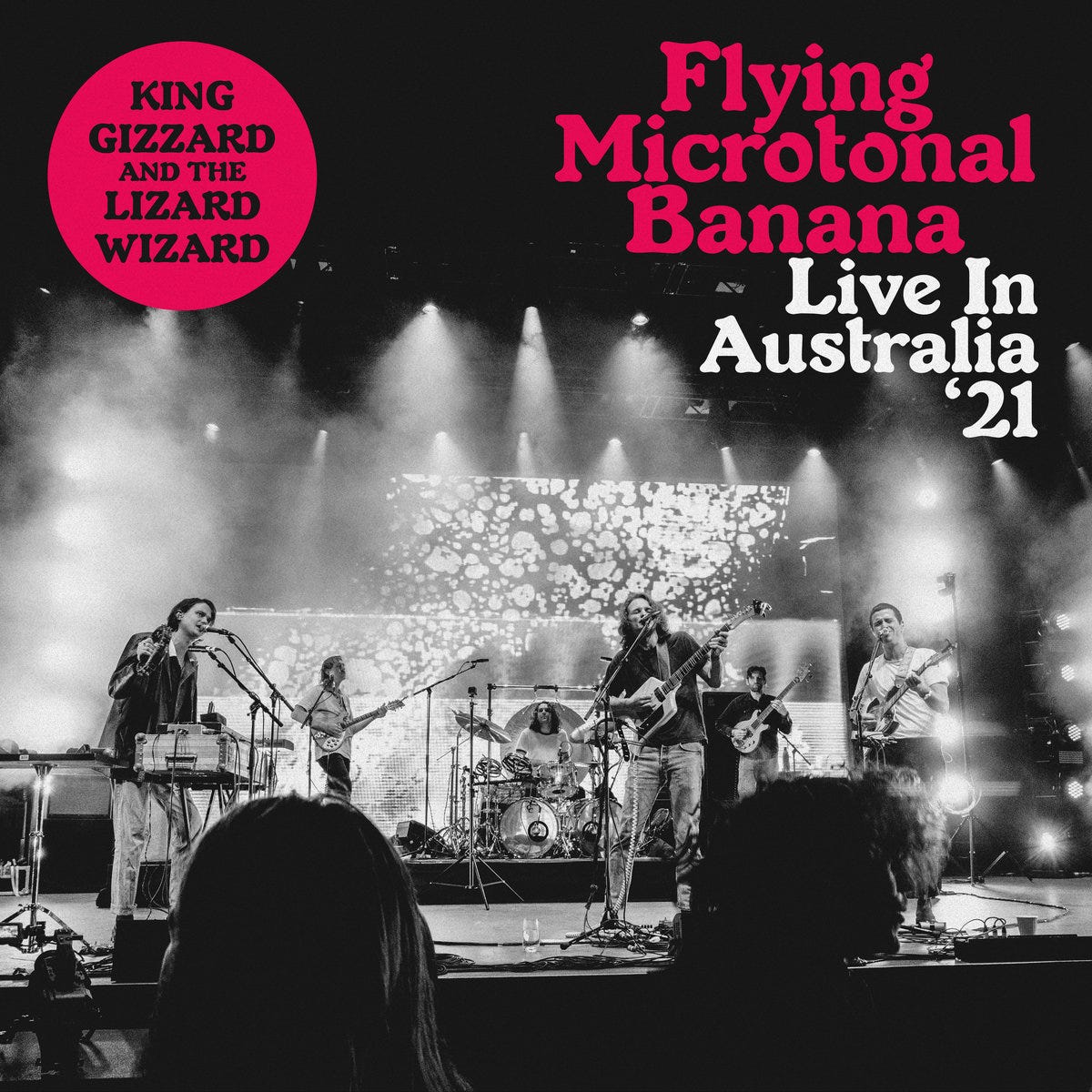
King Gizzard & The Lizard Wizard: The most famous modern proponents, they released a trilogy of albums using custom-fretted 24-EDO (quarter-tone) instruments.
- Music example: Rattlesnake
- Wikipedia article: https://en.wikipedia.org/wiki/King_Gizzard_%26_the_Lizard_Wizard
Brendan Byrnes: A composer and guitarist focused on “Xenharmonic Pop,” proving that microtonality can be upbeat, groovy, and accessible.
- Music example: Astral Bloom
Tolgahan Çoğulu: Known for inventing the Adjustable Microtonal Guitar, which allows players to move individual frets to match any Turkish Maqam or microtonal scale.
- Music example: Microtonal Guitar Intro
- Xen Wiki article: https://en.xen.wiki/w/Tolgahan_%C3%87o%C4%9Fulu
Glenn Branca: A “No Wave” icon who utilized massive orchestras of retuned electric guitars to create overwhelming harmonic resonance.
- Music example: Symphony №13 (Hallucination City)
- Wikipedia article: https://en.wikipedia.org/wiki/Glenn_Branca
The Mercury Tree: A progressive rock band that transitioned to using 17-EDO and 34-EDO, resulting in a sound that is both catchy and harmonically “wrong” in the best way.
- Music example: Spidermilk
- Xen Wiki article: https://en.xen.wiki/w/The_Mercury_Tree
Jute Gyte: A one-man black metal project (Adam Kalmbach) that uses 24-tone guitars to create swirling, disorienting walls of sound that feel like “liquid” metal.
- Music example: The Woodcutter Sawing His Hands
Cryptic Ruse: An artist specializing in “Doom-Microtonality,” using deep, slow-moving riffs in tunings like 22-EDO to highlight the beating of dissonant intervals.
- Music example: Chains of Smoke
- Xen Wiki article: https://en.xen.wiki/w/Deja_Igliashon
Electronic & Digital
Sevish: A leading figure in modern electronic microtonality, Sevish blends drum and bass with scales like 22-EDO and 53-EDO to create vibrant, “unearthly” grooves.
- Music example: Gleam
- Xen Wiki article: https://en.xen.wiki/w/Sevish
Benyamind: An ambient and cinematic composer who utilizes various EDOs and Just Intonation to create lush, atmospheric soundscapes.
- Music example: Namoic
JUMBLE: A modern creator who uses microtonality to breathe new life into digital synthesis, often experimenting with how different temperaments affect the “vibe” and timbre of electronic leads.
- Music example: JUMBLE — 17-EDO
Carlo Serafini: An expert in “non-octave” scales like Wendy Carlos’s Gamma, his work often feels like a crystalline, mathematical exploration of harmonic space.
- Music example: Gammatar
Zhea Erose: A composer, theorist, and educator whose work explores the emotional “colors” of different temperaments, often focusing on high-fidelity sound design.
- Music example: The World’s Most Beautiful Tuning
- Xen Wiki article: https://en.xen.wiki/w/Zhea_Erose
Elaine Walker: Leader of the band ZIA, she is a proponent of the Bohlen-Pierce scale — a radical system that divides the “tritave” (a 3:1 ratio) instead of the standard octave.
- Music example: ZIA — Love Song
- Xen Wiki article: https://en.xen.wiki/w/Elaine_Walker
Merct: A highly active member of the online microtonal community, Merct is known for technical demonstrations and compositions in 31-EDO and other “meantone” temperaments.
- Music example: Merct 31-EDO Theory/Composition
- Xen Wiki article: https://en.xen.wiki/w/Merct
Nat Muntz: A versatile composer who applies microtonal principles to genres like lofi and jazz-adjacent electronic music, proving that these notes can be incredibly chill and melodic.
- Music example: Nat Muntz — Microtonal Lofi
Comments
Post a Comment