The twelve-note octave is so deeply embedded in Western musical thinking that it can be hard to notice it’s a choice: other divisions are possible — and they produce not just different notes but different harmonic logics, different emotional palettes, different ways of thinking about what consonance even means.
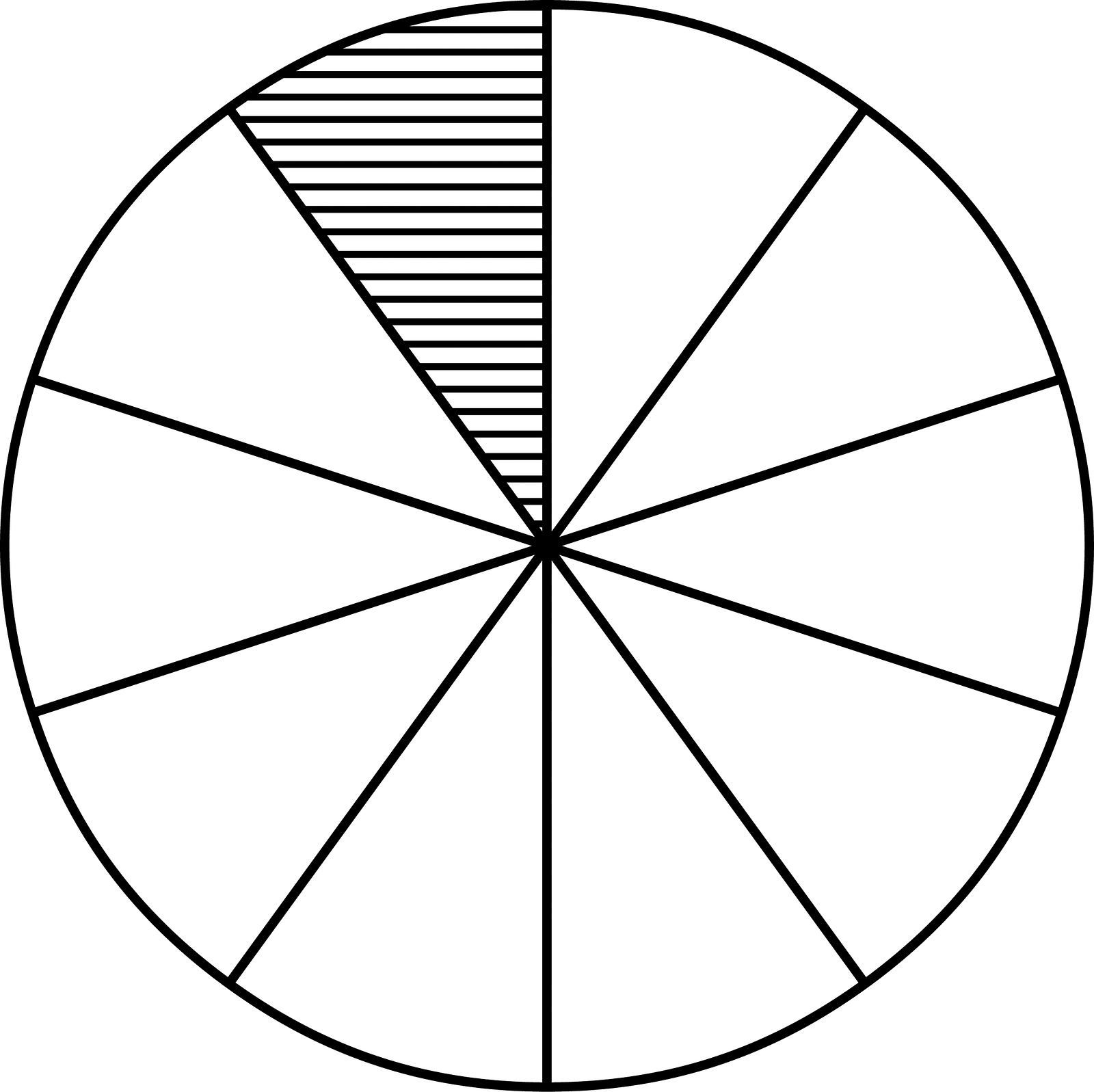
10edo — ten equal divisions of the octave — is one of the more musically compelling alternatives. Each step is exactly 120 cents (a semitone in standard tuning is 100¢, a whole tone 200¢, so 10edo’s basic unit falls between the two). That in-between quality turns out to be the key to everything: 10edo is dominated by neutral intervals that sit precisely where the major/minor distinction used to be, and it approximates the harmonic seventh (the flat seventh of the overtone series, the note that gives blues and barbershop their characteristic ring) well enough to support a complete alternative harmonic language built on sevenths rather than thirds. It also has a body of existing music spanning decades, and — for guitarists especially — some practical advantages over 12edo. This article assumes you’re comfortable with standard theory terminology and works from there.
The Intervals: What You’re Working With
The Intervals: What You’re Working With
The ten steps give you these key intervals:
1 step = 120 cents. This is your smallest interval. It sits between a semitone (100¢) and a whole tone (200¢), and it functions as a kind of neutral second — not quite the leading-tone tension of a semitone, but not the spaciousness of a whole step either. It’s close to the just ratio 15/14. You’ll hear something vaguely similar in maqam music from the Middle East.
2 steps = 240 cents. This lands between a major second and a minor third, approximating the just ratio 8/7 — a wide, slightly crunchy interval that has a strong, bluesy personality in the right context.
3 steps = 360 cents. This is the heart of 10edo’s harmonic character. It’s a neutral third — precisely halfway between a major third (400¢) and a minor third (300¢). This interval approximates the just ratio 16/13 extremely closely (within half a cent). If you’ve ever heard a neutral third in Turkish or Persian classical music, you know the bittersweet quality it has — neither the brightness of major nor the sadness of minor, but something stranger and more ambiguous.
4 steps = 480 cents. A slightly flat perfect fourth. The just fourth is 498¢, so this is about 18 cents flat — noticeably flat if you listen for it, but close enough to function harmonically as a fourth-like interval.
5 steps = 600 cents. The tritone. This is the exact same tritone as in 12edo — an equal division of the octave always produces a tritone at the halfway point in any even-numbered edo. So here’s one landmark that sounds completely familiar.
6 steps = 720 cents. A slightly sharp perfect fifth (the just fifth is 702¢, so this is 18 cents sharp). Like the flat fourth, it’s recognizable as a fifth but noticeably “off.”
7 steps = 840 cents. A neutral sixth, the inversion of the neutral third. Close to the just ratio 13/8.
8 steps = 960 cents. Approximating 7/4, the harmonic seventh — the bluesy, flat seventh that appears naturally in the overtone series. This is actually one of 10edo’s strengths, and we’ll return to it.
9 steps = 1080 cents. A neutral seventh, close to 15/8.
The picture that emerges: 10edo is a world dominated by neutral intervals. The major/minor binary that underlies most Western harmony is gone. In its place you have a single neutral third that does the work of both — which means harmonic tension and resolution work differently here, and the emotional palette is genuinely unlike anything in standard music.
The Relationship to 5edo
One of the easiest ways to understand 10edo is to notice that it contains 5edoas a subset. 5edo divides the octave into five equal steps of 240 cents each — a perfectly symmetrical pentatonic system. Think of a standard pentatonic scale, but with all the gaps made equal.
10edo is what you get when you take 5edo and insert a new note exactly halfway between each existing note. Those new notes — at 120¢, 360¢, 600¢, 840¢, and 1080¢ — are the “extra” five notes that give 10edo its neutral-interval flavor. This means 10edo has a built-in pentatonic backbone (the 5edo notes) plus a set of in-between pitches you can weave in and out of.
Scales in 10edo
This is where things get interesting for composers and improvisers.
The “Whole-Tone” Pentatonic Scales
Just as 12edo contains two interlocking whole-tone scales, 10edo contains two interlocking five-note scales using only the even-numbered steps (0–2–4–6–8) or only the odd-numbered steps (1–3–5–7–9). These are called whole-tone pentatonics. They have a floating, suspended quality — harmonically limited but texturally distinctive, good for atmospheric or impressionistic writing.
The Mosh Scale (3L 4s): 10edo’s Diatonic
The most important scale in 10edo is the seven-note scale generated by stacking neutral thirds (3 steps). This produces the interval pattern 2 1 1 2 1 2 1 in steps — a 7-note scale with two step sizes, called 3L 4s or “mosh”.
This is the closest thing 10edo has to a diatonic scale. It has seven notes, it has a sense of tonal center, and it contains a mixture of larger and smaller steps that gives it melodic variety. But unlike a major or minor scale, all its thirds are neutral — so every “triad” you build on it sounds like neither major nor minor. It’s often described as a neutralized diatonic scale, and it has a haunting, ancient quality that some compare to certain modes of Middle Eastern or early medieval music.
The Pinetone Pentatonics
You can extract two pentatonic scales from the mosh scale:
- Pinetone major pentatonic: steps 2 1 3 1 3
- Pinetone minor pentatonic: steps 3 1 2 3 1
These are like the major and minor pentatonics you know, but with their character shifted — the larger steps are now 3 steps (360¢) instead of 4 (a major third in 12edo). Good entry points for improvisation if you want to get a feel for the sound of 10edo without dealing with all seven notes at once.
The Decimal/Lemba Scale
Another useful scale is Decimal, a six-note scale with the pattern 2 2 1 2 2 1(over a half-octave period). It’s a symmetrical scale with a strong, organized feel — useful for composition if you want something more structured than the mosh scale.
Harmony in 10edo: A Different Approach
Forget Major and Minor (Almost)
In 10edo, the dicot temperament is at work: the major third (400¢) and minor third (300¢) are both mapped to the same neutral third (360¢). This means there is no harmonic distinction between a “major triad” and a “minor triad” — they’re the same chord. Your ears, trained on major/minor harmony, will hear this as neither or both simultaneously.
This isn’t a bug. It’s a feature that opens up a different kind of expressive space. Instead of the bright/dark binary, you get chords that feel suspended, archetypal, and strangely serene or strangely unsettling depending on context and voicing.
Metallic Harmony: 10edo’s Killer App
Here’s one of the most compelling reasons musicians are drawn to 10edo. The tuning system has a remarkably good approximation of the 7/4 ratio — the so-called harmonic seventh, a flat seventh that appears naturally in the overtone series and gives blues and barbershop music much of their characteristic sound. In 10edo, 8 steps (960 cents) gets you within about 9 cents of 7/4, which is a decent approximation.
This enables what’s called metallic harmony — an approach to building chords using sevenths as the primary consonant interval rather than thirds. The idea is to treat 7/4 (and related intervals like 13/7) as the building blocks of chords, in the same way that 5/4 and 6/5 are the building blocks of major and minor triads in standard harmony. The resulting chords have a characteristic cold, resonant, metallic quality — hence the name.
The seven-note mosh scale in 10edo contains three “hard” metallic triads and three “soft” metallic triads plus one symmetrical triad — a rich palette for a 10-note system. Hard triads place the 7/4 interval on the bottom of the chord for a rawer, grittier sound; soft triads place it on top for a smoother, more ethereal quality.
If you’ve spent time with jazz harmony and you love the sound of dominant seventh chords and their resolutions, metallic harmony gives you a parallel universe version of that language — different raw materials, different emotional gravity, but a similar structural logic of tension and resolution.
The 4:6:7 Chord
A particularly important sonority in 10edo is the chord built from the ratios 4:6:7 — a root, a (flat) fifth, and a harmonic seventh. This maps to intervals of 6 steps and 8 steps in 10edo (720¢ and 960¢). It’s a stable, resolved-sounding chord with an open, hollow quality, often compared to the sound of bells or struck metal. Its inverse, 1/(12:8:7), is equally important. These are the basic “consonances” of metallic harmony.
Why 10edo Is Particularly Good for Guitar
Here’s a practical note for guitarists. In standard tuning, a guitar is tuned in fourths (except for the G-B string, which is a major third). The fourth in 12edo is 498 cents — not evenly divisible into the 200-cent whole-step grid, which is why standard guitar tuning has that one annoying irregularity at the G-B string.
In 10edo, the near-fourth is 480 cents (4 steps). And here’s the elegant part: five of these 480-cent fourths stack to exactly two octaves (480 × 5 = 2400 cents). This means you can tune all six strings in uniform “fourths” and the math works out perfectly. Every string is tuned the same interval apart, which means chord shapes and scale fingering patterns are completely uniform across all string pairs. No more G-B exception. The “E chord shape” works the same everywhere on the neck, the “A chord shape” works everywhere, and so on. This uniformity makes 10edo significantly easier to learn on guitar than 12edo in some respects, despite the unfamiliar intervals.
What 10edo Is Less Good At
Honesty is important here. 10edo has some real limitations, and knowing them upfront will save you frustration.
The perfect fifth (the most important interval in Western harmony after the octave) is 18 cents sharp in 10edo. This is a significant deviation — enough to sound noticeably “off” to trained ears, and enough to make conventional fifth-based harmony feel unstable. For comparison, 12edo’s fifth is only 2 cents flat. If your musical thinking is heavily rooted in fifth-based harmonic motion (circle of fifths progressions, functional tonal harmony), 10edo will feel awkward at first.
The major third is 40 cents flat (remember, it merges with the minor third into a single neutral third). This means 10edo does not support conventional major/minor harmonic language — it genuinely is a different harmonic world, not just a slightly detuned version of the one you know.
The 11th harmonic and other higher-limit harmonics are poorly approximated. 10edo works best when treated as what theorists call a 2.3.7.13 subgroup temperament — meaning it represents the harmonics 2, 3, 7, and 13 reasonably well, but 5 and 11 are best avoided or used with awareness of their inaccuracy.
Getting Started: Practical Approaches
Software: The easiest way to explore 10edo is with software that supports Scala tuning files or MIDI Tuning Standard (MTS). Pianoteq, Surge XT, and many other softsynths can be retuned. The Scala file for 10edo is straightforward — ten equal steps of 120 cents. Oddsound MTS-ESP is a popular plugin for managing microtuning in a DAW environment.
Keyboard mapping: On a standard 12-note keyboard, you can map 10edo by leaving two keys unused (or mapping them to passing tones from a higher EDO). A common approach is to use C, C#, D, D#, E, F#, G, G#, A, A# for the ten 10edo notes, leaving F and B unused. You lose a couple of white keys but gain a workable layout.
Guitar: As described above, 10edo is genuinely well-suited to guitar. Some players use a 10edo fretted guitar (available as a custom instrument), while others explore 10edo through software amp sims and MIDI guitar.
Start with the pentatonics: The Pinetone pentatonic scales are your easiest entry point. They have the same number of notes as a standard pentatonic and a similar melodic logic, but with the distinctive neutral character of 10edo. Improvise over a drone and let your ears adjust.
Timbre matters enormously: As Rich Cochrane (one of the composers in the PDF source for this article) notes, acoustic piano sounds are often poorly suited to alternative tunings because of the complex harmonic content of the piano’s overtone series. Electric piano, plucked string sounds, bells, and metallic timbres tend to work much better in 10edo — and the last of these is no surprise given the system’s affinity for metallic harmony.
Listening: Where to Start
The body of music in 10edo is surprisingly large. Here are some recommended starting points drawn from the documented discography:
- ZIA (Elaine Walker) — A pioneer of 10edo composition. Her albums ZIA 1.5 (1992), SHEM (1996), and Trapezoid(2019) span nearly three decades of work in the system. “Decagon Dancefloor” from Trapezoidis a great introduction.
- Sevish — Electronic music producer whose album Harmony Hacker(2017) includes “Vidya” in 10edo. Sevish’s production quality is high and the music is genuinely melodic and accessible.
- Bill Sethares — From Xentonality (1997): “Ten Fingers” and “Circle of Thirds” are early, serious explorations of 10edo harmony.
- City of the Asleep — “Ideas on the Waterfall of Expression” from Map of an Internal Landscape (2007) offers a more atmospheric approach.
- Hideya — A series of evocative short pieces from 2020–2023 with titles like “Like spring sea” and “Like Summer Creatures.” Melodic, gentle, and a wonderful demonstration that 10edo can be beautiful rather than confrontational.
The Bigger Picture
Why bother with all of this? For some musicians the answer is purely intellectual — there’s a puzzle-solving satisfaction in mapping a new harmonic territory. But the more compelling answer is emotional and creative.
Major and minor are extraordinarily powerful, but they’re not the only emotional colors available to human ears. The neutral thirds of 10edo carry a quality that has no precise analogue in standard Western music — not quite sad, not quite happy, but weighted and resonant in a way that feels ancient and new at the same time. The metallic chords built on sevenths have a bell-like clarity and cold beauty that standard triads simply cannot produce. These are real expressive resources, not just theoretical curiosities.
10edo is also, by microtonal standards, relatively accessible. It has a fairly small number of notes to learn, and its scales have recognizable structure. And with the neutral third appearing prominently in many of the world’s musical traditions — from Carnatic music to Turkish maqam to certain modes of medieval European chant — your ears are not as unprepared as you might think.
The best advice is simply to listen. Find a recording you like from the list above, sit with it for a few sessions, and let your ears do the adjusting. The intervals that sound strange at first will start to feel like home. And then you’ll have a new set of colors to paint with.
Going Deeper
The primary reference for everything in this article is the Xenharmonic Wiki article on 10edo, which is comprehensive and kept up to date by the microtonal community. The wiki also has articles on related concepts including metallic harmony, the mosh scale (3L 4s), dicot temperament, and 5edo. The wiki uses some advanced regular temperament theory notation that can be intimidating at first, but the introductory sections are usually readable without a mathematics background.
For a broader introduction to microtonal music that goes well beyond 10edo, the Xenharmonic Wiki’s main page is the best starting point, and the community around it is genuinely welcoming to newcomers.
Happy exploring.
Comments
Post a Comment