A scale from the past, the key to music’s future, born of the golden ratio
In 12edo — the system you already know — the octave is split into 12 equal steps of 100 cents each. A semitone is exactly 100 cents, a major third is exactly 400 cents, a perfect fifth is exactly 700 cents.
In 50edo, the octave is instead split into 50 equal steps of 24 cents each. You still have all the familiar intervals — fifths, thirds, sevenths — but they land at slightly different places, often closer to the mathematically “pure” versions of those intervals found in just intonation.
Mathematically savvy musicians have been eyeing 50edo for over 250 years. Robert Smith described it in his 1759 book Harmonics or the Philosophy of Musical Sounds, and later the music theorist W. S. B. Woolhouse noted it was close to the ideal least-squares tuning for 5-limit meantone.
50edo Is a Meantone — But a Very Special One
The most important thing to understand about 50edo is that it belongs to the family of meantone temperaments. Meantone is the family of tunings that dominated European music from roughly the Renaissance through the Baroque — the world of Monteverdi, Purcell, and early Bach. In a meantone system, the syntonic comma (the tiny gap between four perfect fifths and a major third, about 21.5 cents) is distributed — or “tempered out” — so that you get beautifully resonant major thirds in exchange for slightly narrower fifths.
You already know one meantone: 12edo. But 12edo is a pretty rough meantone. Its major third is 14 cents sharp of pure, and its minor third is 16 cents flat of pure — errors large enough that trained ears notice them clearly.
Here’s how some well-known meantones compare on major third accuracy:
- 12edo: Major third at 400¢ — 14 cents sharp of pure (386¢)
- 19edo: Major third at 379¢ — 7 cents flat of pure
- 31edo: Major third at 387¢ — just 1 cent flat of pure
- 50edo: Major third at 384¢ — only 2 cents flat of pure
So 50edo gives you a major third nearly as pure as 31edo’s legendary one. But it also does something none of those smaller systems can match.
The Meantone Series: From 12 to 19 to 31 to 50
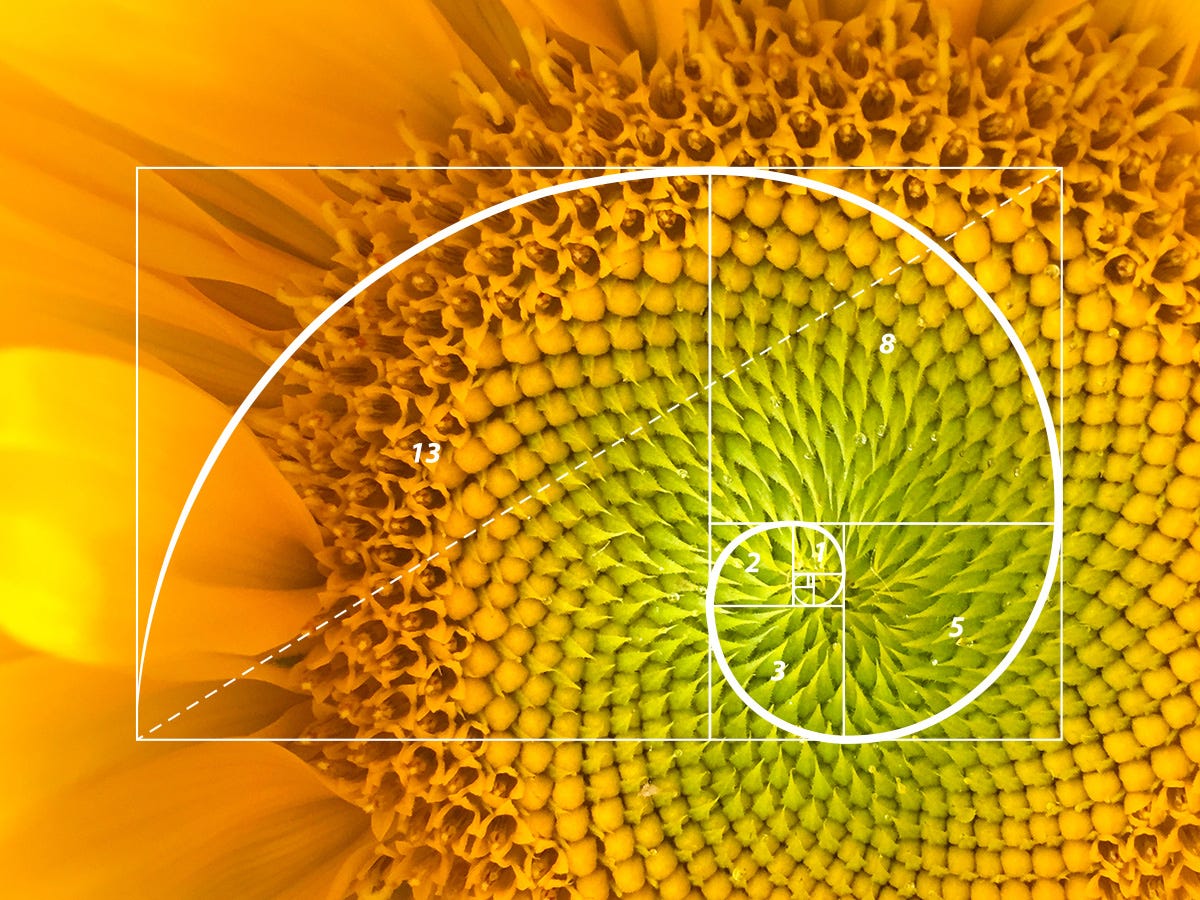
50edo doesn’t come out of nowhere. It’s part of a sequence of meantones known as Kornerup’s sequence (named after Danish musician Thorvald Kornerup), which goes: 7, 12, 19, 31, 50, 81… Each step adds the two previous numbers. This sequence converges toward the “Golden Meantone,” where certain interval ratios approach the golden ratio. More practically, each step in this sequence is a larger, richer meantone that includes everything the previous one could do, and more.
Think of it like expanding instrument families:
- 12edo gives you minor and major — that’s it for thirds.
- 19edo separates the enharmonics (E# and F are now different notes!) and adds new “sub” and “super” interval flavors.
- 31edo adds a well-tuned 7/6 subminor third, a neutral third near 11/9, and overall excellent representation of intervals involving the prime numbers 5 and 7.
- 50edo includes all of the above, plus accurate approximations of even higher harmonics — primes 11 and 13 in particular — bringing us into the realm of what theorists call the 13-limit.
The Key Selling Point: 10 Types of Thirds
Here’s where 50edo gets genuinely astonishing for a harmony-focused musician. In 12edo, you have two types of thirds: minor (300¢) and major (400¢). In 31edo, you get five distinct third-like intervals. In 50edo, you get ten.
Let’s walk through them, from narrowest to widest, with their approximate just intonation equivalents:
- Arto (diminished) third — 240¢, close to 15/13 or 8/7. This sits below the subminor range; it’s enharmonically also a super second.
- Subminor (septimal minor) third — 264¢, close to 7/6. Deep, dark, with a distinctly “blues-adjacent” flavor.
- Minor third — 312¢, close to 6/5. Only about 4 cents off pure — noticeably smoother than 12edo’s version.
- Supraminor (lesser neutral) third — 336¢, between minor and neutral. Familiar to Persian and Middle Eastern music.
- Submajor (greater neutral) third — 360¢, close to 16/13 or 11/9. The upper neutral third.
- Major third — 384¢, close to 5/4. Just 2 cents flat of pure.
- Supermajor third — 408¢, close to 14/11. Bright, with a slightly “sharp” major quality, familiar from expressive string playing.
- Septimal supermajor third — 432¢, close to 9/7. Bold and striking.
- Tendo (augmented) third — 456¢, close to 13/10. Above supermajor; enharmonically also a sub fourth.
- Wide augmented / near-fourth — 480¢, approaching the perfect fourth.
As composer and theorist Cam Taylor wrote in his influential 2014 blog post about 50edo, these ten third-types give the system “a grand total of 10 basic tonalities with which to build chords, scales, and music of many moods.” He also noted that after getting deeply familiar with 50edo’s thirds, going back to 31edo’s minor third started to sound sour by comparison.
All of these thirds (and their inverse sixths) sit close enough to simple frequency ratios that chords built on them have genuine acoustic resonance — they “lock in” rather than beating restlessly.
The Harmonic Highlights: 11 and 13 Are Your Friends
One of the most famous properties of 31edo is how well it tunes the 7th harmonic (7/4, the “natural” or “barbershop” seventh). 50edo’s 7/4 is not quite as accurate — it’s about 8.8 cents flat. But 50edo has two aces up its sleeve that 31edo doesn’t: the 11th and 13th harmonics.
- The 11th harmonic (11/8, the “super fourth,” about halfway between a perfect fourth and tritone) is tuned to within just 0.7 cents in 50edo — essentially pure.
- The 13th harmonic (13/8, a slightly flat major sixth) is within 0.5 cents — again, essentially pure.
This makes 50edo a powerhouse for what theorists call 13-limit harmony: chords built from frequency ratios involving the primes 2, 3, 5, 7, 11, and 13. Many of the world’s musical traditions outside of Western common practice use intervals drawn from this harmonic series — Arabic maqam, Persian dastgah, and various folk traditions of the Balkans all use intervals that live naturally in 50edo.
The Xenharmonic Wiki notes that 50edo “maps all 19-odd-limit intervals consistently” (with just two exceptions), which is a remarkable level of harmonic coverage for a 50-note system.
Early Music in 50edo: A Historically Informed Surprise
Here’s something that might surprise you. Because 50edo is a meantone, it’s actually a historically plausible tuning for a lot of Renaissance and Baroque music. Composers like Monteverdi, Purcell, Couperin, and early Bach wrote in meantone environments, and their music genuinely sounds different — more colorful, more expressive in certain keys, and richer in thirds — when played in a well-chosen meantone rather than 12edo.
50edo is close to 2/7-comma meantone and almost exactly 5/18-comma meantone, both of which are historically documented tuning preferences. Renderer Claudi Meneghin has demonstrated this beautifully with 50edo versions of Bach’s Ricercar a 3 from the Musical Offering, movements from The Art of Fugue, Chopin’s Op. 28 №7, and Gabriel Fauré’s Pavane — pieces that reveal new warmth and color when placed in this richer tuning environment.
The Lumatone: The Instrument That Makes 50edo Playable
Talking about 50edo would be incomplete without addressing the elephant in the room: how do you actually play 50 notes per octave? A standard piano keyboard only has 12 per octave. You’d need something very different.
Enter the Lumatone, a 280-key hexagonal MIDI controller with individually programmable, color-coded keys. Its isomorphic layout means that every chord and scale has the same finger shape anywhere on the keyboard — a property that makes navigating large tuning systems far more intuitive than a regular keyboard ever could be. The isomorphic layout of the Lumatone is especially powerful for people who want to move beyond 12 notes per octave into microtonality and polychromatic music. Each key is fully programmable for tuning, color, and MIDI assignment, making it possible to lay out all 50 notes of 50edo in a logical, playable way.
Spotlight: Bryan Deister, 50edo’s Most Visible Advocate
If you want to hear what 50edo sounds like in the hands of a master, look no further than Bryan Deister. A composer, multi-instrumentalist, and jazz pianist, Deister holds a degree from Berklee College of Music and has been exploring microtonal covers on the Lumatone with massive success. His TikTok presence has grown to over 213,000 followers and 8 million likes, making him arguably the most widely-heard 50edo musician working today.
What makes Deister’s work so compelling as an entry point is his repertoire: he doesn’t just compose abstract microtonal pieces. He takes music people already know and love, and reinterprets it in 50edo, revealing just how much richer and stranger familiar songs can become.
His 50edo catalog includes:
- “microtonal improv in 50edo” (2024) — freeform exploration of the system’s tonal palette
- “Piano that may not be played that well — Deltarune (microtonal cover in 50edo)” (2025) — a retuned version of the beloved game soundtrack
- “Snow White — Laufey (microtonal cover in 50edo)” (2025)
- “Heat Abnormal — Iyowa (microtonal cover in 50edo)” (2025)
- “The Prettiest Little Song Of All — Belasco (microtonal cover in 50edo)” (2025)
- “50edo improv” (2025)
- “Mother — Umineko (microtonal cover in 50edo)” (2026)
Hearing a pop song you know well played back in 50edo is often the fastest way to understand what the tuning actually sounds like — the thirds feel warmer and more settled, unusual intervals appear that don’t exist in 12edo, and the overall harmonic texture has a depth that’s hard to put into words until you hear it.
So Why Not Just Use 31edo?
This is the natural question for anyone already familiar with the microtonal world. 31edo is fantastic — it has excellent 7-limit harmony, a gorgeous major third, and a manageable size. But 50edo offers things 31 can’t:
- Better 11 and 13 approximations — 50edo’s 11/8 and 13/8 are nearly pure; 31edo’s are less accurate.
- More tonal variety — 10 types of thirds vs. 5 in 31edo.
- Finer melodic gradations — 24-cent steps vs. 38-cent steps mean smoother voice leading and more subtle melodic inflection.
- Higher harmonic coverage — 50edo handles intervals all the way up into the 19-limit with reasonable accuracy.
The tradeoff is obvious: 50 notes is a lot. You need a specialized instrument to access them all, and the theory gets more complex. But for composers and performers willing to invest, the payoff is a harmonic universe of extraordinary richness.
Getting Started: Resources and Listening
If this article has piqued your curiosity, here’s where to go next:
- The 50edo Xenharmonic Wiki page — comprehensive technical reference including interval tables, notation systems, and a full list of composers and pieces.
- Bryan Deister on TikTok — the easiest entry point for hearing what 50edo actually sounds like in practice.
- Meantone temperament on the Xen Wiki — for the broader context of why meantone matters.
- Just intonation on the Xen Wiki — to understand what all those frequency ratios actually mean.
- The Lumatone website — if you want to explore what it would take to actually play this music.
Microtonal music has a reputation for being abstract and inaccessible, but 50edo sits in a sweet spot: it’s grounded in the same meantone logic that gave us Western tonal music, it sounds immediately beautiful rather than alien, and it extends the harmonic palette in ways that feel like a natural evolution rather than a radical break. It’s the meantone system for people who want more — more colors, more moods, more music.
Further reading:
Cam Taylor’s original 2014 blog post “50EDO and why it kicks ass, types of thirds, a meantone series” is a wonderful primary source from a musician who fell deep into 50edo and wanted to bring others along for the ride.
The Xenharmonic Wiki’s 50edo article is the most complete technical reference available.
Comments
Post a Comment